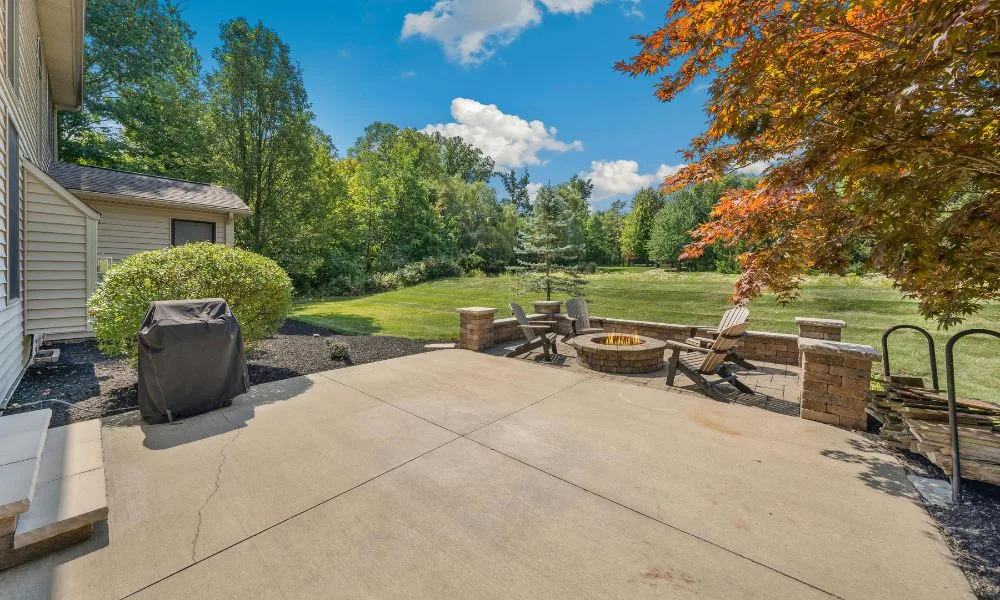
You don’t need a sprawling patio to enjoy a fire table. But you do need to choose the right shape. In a compact backyard, the wrong fire table shape can eat up floor space, block traffic flow, and make the whole area feel cramped. The right one, on the other hand, can make your outdoor space feel intentional, open, and inviting. Before you buy, it’s worth understanding how shape affects not just aesthetics but also function, seating capacity, and the way people actually move around your yard.
Why Shape Matters More Than You Think in a Small Backyard
Most people focus on size when they shop for a fire table, and that’s understandable. But shape plays an equally important role, especially in a small backyard where every square foot counts.
A fire table’s shape determines how seating is arranged around it, how much clearance space you need on each side, and whether the piece anchors the space or fights against it. For example, a shape with sharp corners requires more buffer room than one with soft, curved edges. In a tight layout, that difference can mean the gap between comfortable and cluttered.
Fire tables from Majestic Fountains come in round, rectangular, and square configurations, which makes it easier to compare how each shape performs in a real backyard setting. Understanding the trade-offs before you commit saves you from a costly mistake and helps you get the most out of a limited outdoor space.
Round Fire Tables: The Small-Space Favorite
Round fire tables consistently rank as the top choice for small backyards, and the reasons are practical rather than just aesthetic.
First, a round shape removes corners entirely from the equation. In a compact space, corners are obstacles. They snag foot traffic, limit furniture arrangement, and create dead zones that serve no purpose. A round fire table sidesteps all of that. You can circle chairs around it without any seat feeling like the awkward corner placement.
Second, round tables create an equal social experience. Everyone sits the same distance from the fire, which encourages conversation and connection. For small gatherings of two to six people, this format works exceptionally well.
From a visual standpoint, round shapes also take up less perceived space. The absence of hard edges makes the table feel lighter and less imposing, which is a real advantage in a yard where you don’t want one piece of furniture to dominate the view.
If your backyard is roughly square in layout, a round fire table fits naturally at the center and leaves usable space on all sides.
Rectangular Fire Tables: Sleek but Space-Hungry
Rectangular fire tables look sharp. There’s no question about that. Their elongated profile suits a modern aesthetic, and they work beautifully on larger patios where length and dimension add drama rather than disorder.
But, in a small backyard, rectangular fire tables present real challenges. Their extended footprint demands proportional clearance on all four sides. Most fire safety guidelines recommend at least 36 inches of clear space around a fire feature, and a long rectangle multiplies that requirement in a way that a compact round table does not.
Plus, rectangular tables naturally divide a space into two sides, which can feel formal or restaurant-like rather than relaxed and intimate. In a small yard, that dynamic doesn’t always serve you well.
That said, a narrow rectangular fire table might work if your backyard is more of a long, thin strip than a square footprint. In that case, the shape mirrors your yard’s geometry rather than fighting it. So it’s not a complete rule-out. It simply requires more careful measurement and layout planning before you commit.
Square Fire Tables: The Underrated Middle Ground
Square fire tables don’t get nearly enough credit, particularly for small backyards that are themselves square.
A square table shares the geometric symmetry of many standard backyard layouts. Hence, it slots into the space with a natural sense of order. You can place two chairs on each side, giving you seating for four to eight people without stretching the arrangement awkwardly.
Compared to rectangular tables, square ones have a much smaller footprint. Compared to round tables, they offer a more defined, structured look that suits contemporary and traditional outdoor styles equally well. That versatility makes them a strong contender.
The one drawback is the corners. As noted earlier, corners require clearance and can interrupt foot traffic. But, in a square yard with a clear center focal point, this is rarely a serious problem. You simply position the table centrally and allow enough room on each side for chairs to pull out and people to walk past.
For small backyards with a more formal or structured design, a square fire table often delivers exactly the right balance between function and form.
How to Match Fire Table Shape to Your Backyard Layout
Choosing the right shape comes down to three things: your yard’s footprint, your seating needs, and your movement patterns.
- Start with your yard’s footprint. A roughly square yard pairs naturally with round or square fire tables. A narrow, elongated yard may actually benefit from a slim rectangular table positioned along the length of the space. Lay out your existing furniture first, then sketch where a fire table would sit without blocking walkways or exits.
- Consider how many people you typically host. Round tables seat fewer people efficiently before they become too wide to reach across. Square tables accommodate four comfortably. Rectangular tables seat the most but demand the most space in return. Match the seating capacity to your actual usage, not your best-case-scenario gatherings.
- Think about traffic flow. In a small backyard, you need clear paths to doors, gates, and garden areas. A table with corners positioned near a high-traffic path creates constant friction. A round table in the same spot solves that problem immediately.
- Pay attention to scale. A fire table that looks balanced in a showroom or product photo can feel oversized once it lands in your yard. Always check the actual dimensions and compare them against your available space with some tape on the ground before you order.
Conclusion
For most small backyards, a round fire table is the smartest choice. It removes corners, improves flow, and fits naturally in compact spaces. Square tables offer a structured alternative for yards with a more formal layout, while rectangular tables suit narrow spaces when sized appropriately.
Measure your space carefully, map out your seating, and let your yard’s geometry guide the decision. The right fire table shape doesn’t just fit your backyard. It transforms it.