
A new driveway, patio, or sidewalk is one of the most visible and longest-lasting investments a homeowner will ever make. Done well, the work lasts thirty years and barely needs attention. Done poorly, it cracks within a season, fails inspection, or in the worst cases leaves the homeowner financially exposed for injured workers and unpermitted construction. Concrete is unforgiving, and the difference between a good outcome and a costly one almost always comes down to the contractor selected. Here is what every homeowner should verify, ask, and confirm before signing a concrete contract.
Verify Licensing, Registration, and Insurance
Concrete contractor licensing rules vary widely by state and city. Many states have no statewide general contractor license for residential flatwork, but local building departments still require contractor registration, permits for certain project types, and full compliance with local codes. At a minimum, every legitimate concrete contractor should carry general liability insurance typically $1 million per occurrence or more and workers’ compensation coverage on their crew. Both are non-negotiable. Without them, an injured worker’s claim can land on the homeowner if the contractor turns out to be judgment-proof, and a botched pour quietly becomes the property owner’s problem. Ask for current certificates of insurance issued directly by the carrier, not a photocopy from the contractor’s truck.

Match Specialty Experience to the Project
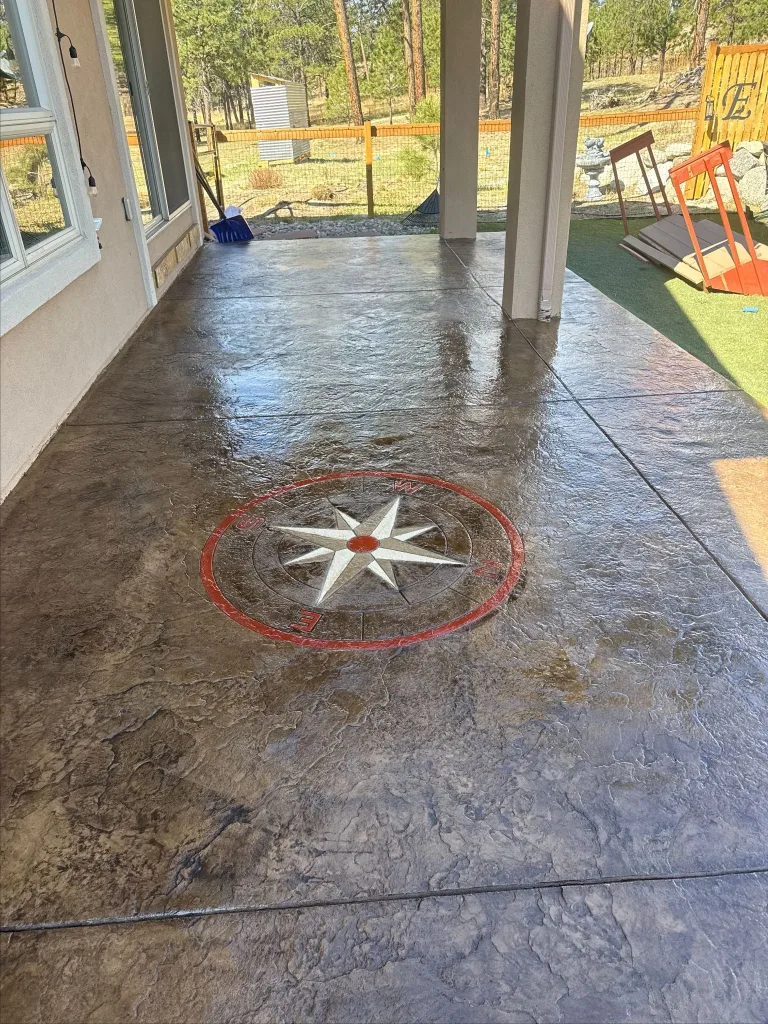
Concrete is not one trade. A crew that pours basement foundations is not necessarily skilled at decorative stamped patios, and a flatwork specialist may not be equipped to handle structural retaining walls. When evaluating a contractor, match the project type to demonstrate experience. For a stamped or colored project, ask to see at least five completed examples of decorative work. For a driveway or sidewalk, ask about jointing patterns and base preparation. For anything load-bearing, confirm the contractor has poured similar projects and is comfortable with the engineering specifications. A contractor who claims to do every kind of concrete equally well is usually a mediocre fit for any specific job.

Demand a Detailed Written Estimate
A one-line bid that says “concrete patio: $8,500” is not an estimate; it is a placeholder for future arguments. A proper written proposal should list the exact scope of work, slab dimensions and thickness, concrete strength (PSI), reinforcement type and spacing, base preparation, joint plan, finish and color details, sealer specification, cleanup expectations, payment schedule, and projected start and completion dates. Anything missing from the estimate becomes a change order later, almost always at the homeowner’s expense. Reading the estimate carefully and asking for line-item clarity on anything vague is the single most effective way to avoid budget surprises after the truck shows up.
Understand the Materials and Specifications
Two patios that look identical at delivery can be very different products underneath. For most residential exterior applications, a four-inch slab of 4,000 PSI concrete with #4 rebar on a sixteen to twenty-four inch grid, poured over four to six inches of compacted aggregate base, is the durable standard particularly in freeze-thaw climates where lower-strength mixes can spall within a few seasons. Air-entrained concrete (typically five to seven percent air) is essential for any exterior slab in a climate that cycles through freezing. If a contractor proposes 3,000 PSI mix without air entrainment for an exterior slab in a cold climate, ask why. A good contractor will explain mix design and reinforcement in plain language.
Be Skeptical of the Lowest Bid
Concrete pricing follows market reality. Materials, labor, fuel, and equipment have known costs, and a contractor whose bid is dramatically below the others is almost always cutting a corner. The homeowner cannot easily see thinner slab, weaker mix, less rebar, no compaction, undersized crew, or no insurance. Common warning signs include cash-only demands, deposits larger than thirty percent of the total price, “leftover material from another job” pitches, door-to-door solicitation after a hailstorm, and pressure to sign on the spot. Reputable contractors compete on quality, scheduling, and reputation. They very rarely compete on being the cheapest option in the driveway.
Check Reviews, References, and Recent Work
Five-star ratings are meaningful only when there are enough of them and they are recent. Look for contractors with consistent reviews over multiple years across Google, Yelp, and the Better Business Bureau. Ask the contractor for two or three recent local references and actually call them and ask whether the project finished on schedule, whether the crew cleaned up daily, and whether anything has failed in the months since. A quick drive-by of a recent installation tells the rest of the story: clean joint lines, even color, and tight forming separate professionals from amateurs. For homeowners along Colorado’s Front Range, hiring an experienced Colorado Springs concrete company with verifiable references and a drivable portfolio of recent work offers the kind of accountability that an out-of-town bidder simply cannot match.
Confirm the Warranty and Cleanup Plan
All concrete eventually develops hairline cracks; that is a property of the material, not a defect. What matters is what the contractor stands behind in writing. Industry-standard residential warranties cover one full year against significant structural cracking and settlement, with separate terms for the sealer on stamped finishes (often one to two years on workmanship). The contract should also spell out cleanup expectations, removal of forms, hauling of broken existing concrete, restoration of any disturbed landscaping, and a final wash-down of the new surface. Walk-off-the-job stories almost always trace back to vague cleanup language and undefined warranty terms. Get both in writing before any deposit changes hands.
The Bottom Line
The contractor you choose is the single biggest variable in how a concrete project turns out. Homeowners who take an extra week to verify insurance, study the estimate, check references, and ask informed questions about specifications routinely end up with patios and driveways that still look great twenty years later. Homeowners who rush past those steps to save a few hundred dollars routinely end up paying for the same work twice. Concrete is permanent, choose the person pouring it accordingly.
FAQs
1. How much should homeowners expect to pay for a concrete patio or driveway?
Pricing depends on the size of the project, site preparation, concrete thickness, reinforcement, finish type, and local labor costs. Basic flatwork is typically less expensive than stamped or decorative concrete, which requires additional labor and materials.
2. How long should a professionally installed concrete project last?
A properly installed concrete driveway or patio can last 25–30 years or longer with routine maintenance. Longevity depends heavily on factors like base preparation, drainage, reinforcement, weather exposure, and installation quality.
3. What questions should I ask before hiring a concrete contractor?
Homeowners should ask about licensing, insurance, experience with similar projects, concrete mix specifications, reinforcement plans, warranties, permits, and expected timelines. Requesting recent references and reviewing completed projects is also important.
4. Is cracking in concrete normal?
Yes. Minor hairline cracking is common as concrete cures and settles over time. However, proper joint placement, reinforcement, and base preparation help minimize larger structural cracks and uneven settling.
5. How long does concrete take to fully cure?
Concrete begins hardening within hours, but it typically takes around 28 days to fully cure and reach its intended strength. Most residential surfaces can handle light foot traffic within 24–48 hours and vehicle traffic after about 7 days, depending on weather conditions and mix design.
6. Do I need permits for a concrete patio or driveway project?
Permit requirements vary by city and county. In many areas, larger patios, driveway replacements, retaining walls, and projects affecting drainage or public sidewalks may require permits and inspections. A reputable contractor should help clarify local requirements before work begins.
About the Author:
John Richey is the owner of Creststone Concrete, a residential concrete contractor serving Colorado’s Front Range from Colorado Springs to Castle Rock. Learn more at creststoneconcrete.com.