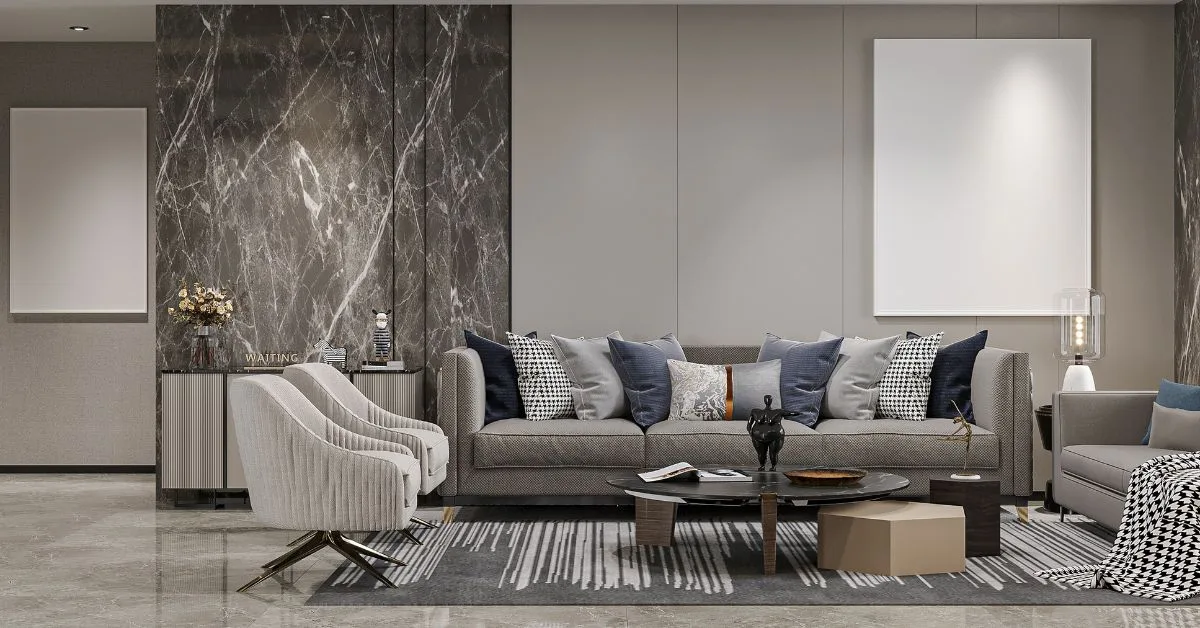
Premium furniture is rarely purchased on a whim. The decision to commission a particular sofa, to choose between two dining tables from different ateliers, or to determine whether a specific credenza will work against the existing architecture of a room — these are considered processes that can run for months. The quality of a piece is almost never the point of doubt. The question is whether it is right for this room, at this scale, with these materials already present.
That question is harder to answer than it used to be, now that much of the initial research happens through a screen.
Why Premium Furniture Is Difficult to Assess Online
Luxury furniture is defined by precisely the qualities that compress worst in digital reproduction. The depth of a hand-applied lacquer. The specific warmth of a particular walnut grain under afternoon light. The visual weight of a marble top against the base that supports it. These are experiences of material character that require close proximity to appreciate fully — and product photography, however accomplished, tends to flatten them.
There is also the question of scale. A dining table that reads as generously proportioned in a showroom, photographed against high ceilings and generous floor area, may carry quite different visual weight in the principal dining room of a Kensington townhouse or a lateral apartment in Mayfair. Product images are styled to show a piece at its best. They are not styled to show how it will behave in your particular room.
Surface finish presents its own difficulties. A stone described as warm travertine reads differently under the natural north light of an urban apartment than under the south-facing exposure of a countryside house. Upholstery colours shift between showroom lighting and domestic conditions in ways that are genuinely difficult to anticipate from a swatch alone.
What Premium Buyers Are Really Trying to Understand
Proportion and how a piece holds the room
Scale is not only about dimensions. It is about visual weight — whether a piece asserts itself in a room or retreats into it, whether it anchors a seating arrangement or unbalances it. A side table with the right footprint but the wrong height can make a carefully considered sofa look stranded. Proportion, in luxury interiors, is felt before it is articulated.
Material relationships in context
The finest furniture exists in conversation with everything around it. A brushed brass detail that reads as refined against linen and pale stone can become assertive next to lacquered surfaces and dark woods. These relationships are almost impossible to predict from materials held individually. They require seeing the piece — or something close to it — positioned within the room’s actual material palette.
The atmosphere a piece contributes to
High-end interiors are composed, not assembled. Every element either serves the room’s intended atmosphere or works against it. A piece that would be beautiful in isolation can introduce a tension that requires the whole space to be re-examined. The buyer who understands this tends to approach each acquisition as a question of fit rather than simply of quality.
Why the Product Image Alone Is Rarely Enough
The white-background studio photograph performs a specific function. It shows the piece clearly, without distraction, and allows close examination of joinery, finish, and form. What it removes entirely is context — and for luxury furniture, context is where the most consequential questions are answered.
A lifestyle image in a styled interior environment comes closer, but it depicts someone else’s room. The ceiling height is different. The floor material is different. The adjacent furniture that shapes the new piece’s proportions belongs to a space that is not yours.
For design-led brands and buyers comparing finishes, silhouettes, and room context before committing, 3d furniture rendering services can help make premium pieces easier to evaluate. A rendering that places a proposed acquisition within a room setting that approximates the buyer’s own space — with the actual floor tone, the actual wall colour, the actual ceiling proportion — gives a basis for assessment that neither the studio image nor the lifestyle photograph can provide.
For pieces with long production timelines or made-to-order specifications, this kind of visual clarity before commitment is not simply convenient. It is the reasonable standard of confidence that a significant investment deserves.
Where Better Visual Information Changes the Decision
Avoiding costly mismatches
The most expensive mistake in luxury furnishing is not choosing a piece that is poorly made. It is commissioning a beautifully made piece that does not work in the room it was intended for. Returns are rarely possible for bespoke or custom orders. The cost of a mismatch — financially and in terms of the time required to find an alternative — is considerable. More visual information earlier in the process tends to compress that risk substantially.
Confidence in material and silhouette
Luxury buyers are sophisticated. They often know what they want in principle and have difficulty only in the translation from imagination to physical reality. Seeing a piece in rendered context — at the correct scale, in the proposed finish, beside the furniture it will share a room with — gives the imagination something more precise to confirm rather than something vague to project onto.
A more resolved final interior
The rooms that feel genuinely considered are almost always the product of decisions made in relation to each other rather than in sequence. A sofa chosen with clear knowledge of how it will sit alongside a particular rug, beneath a particular ceiling, lit by a particular window, belongs to its room differently from one chosen from a product page alone. Better visual information at the selection stage tends to produce interiors that hold together rather than ones that require continued adjustment.
Luxury buyers are not looking only for inspiration. They are looking for assurance — the kind that allows commitment to a significant acquisition with confidence rather than calculation. Better visual tools have made that assurance more accessible at the moment it matters most: before the order is placed.