Termites work quietly. Long before a homeowner notices sagging floors or crumbling trim, colonies have often been active inside walls, sills, and support beams for months or even years. Anaheim’s warm climate and mix of older and newer housing stock create conditions where subterranean termites, in particular, can thrive undetected. Learning to recognize the earliest warning signs is one of the most practical steps a homeowner can take to protect a property’s structural integrity and avoid costly repairs down the line.
Recognizing the First Physical Clues
The earliest signs of termite activity are often small and easy to dismiss. Discarded wings near windowsills, doorframes, or foundation vents are one of the clearest indicators. When a termite colony reaches maturity, it releases swarmers, winged reproductive termites that leave the nest to establish new colonies. After a short flight, these insects shed their wings, leaving small piles behind that can look like fish scales scattered across a surface.
Mud tubes are another telltale sign. Subterranean termites build these pencil-width tunnels out of soil, wood particles, and saliva to travel between their underground colony and a food source while staying protected from open air and predators. They commonly appear along foundation walls, support piers, or exterior stucco, and they are one of the more reliable indicators that a property should be evaluated for termite control in Anaheim before the problem spreads further.
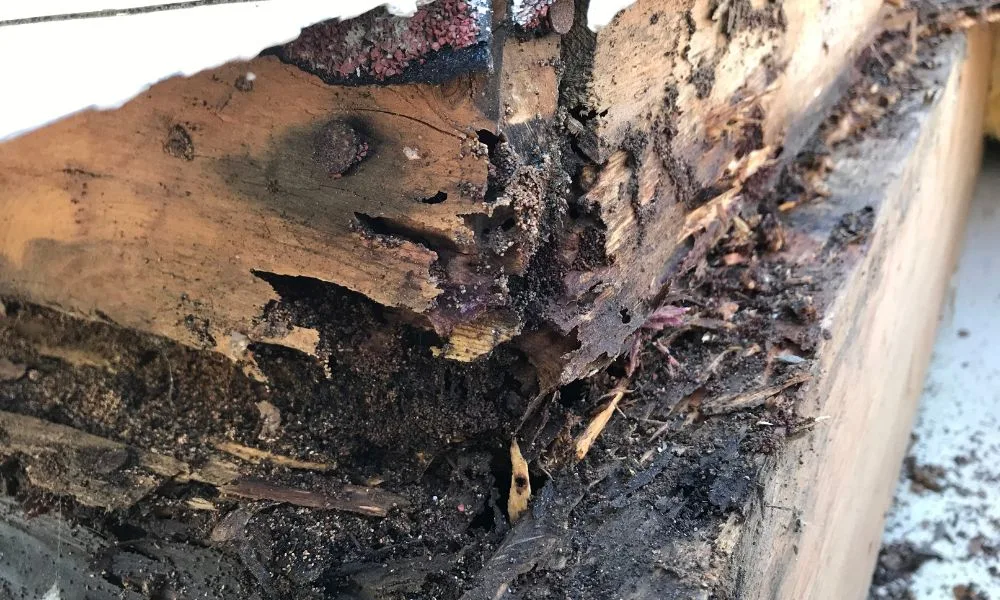
Hollow-sounding timber is a sign that damage has already progressed beneath the surface. Tapping on baseboards, door frames, or exposed beams and hearing a dull or papery sound, rather than a solid knock, suggests termites have consumed the wood from the inside while leaving a thin outer layer intact. Blistered or bubbling paint on wooden surfaces can indicate a similar issue, since moisture and termite activity beneath the finish often cause the surface to warp slightly.
Everyday Signs Homeowners Tend to Overlook
Some warning signs blend so easily into daily life that they go unnoticed for a long time. Doors and windows that suddenly become difficult to open or close are one example. While this is sometimes attributed to humidity or seasonal shifting, it can also result from termites weakening the wood framework around these fixtures, causing subtle warping.
Small, isolated areas of wood deterioration are another clue worth paying attention to. Unlike widespread rot, termite damage often starts in a concentrated area, such as a single floorboard, a portion of a windowsill, or a section of trim near ground level. If a homeowner presses on wood and finds it unexpectedly soft or crumbly in one spot while the surrounding material feels solid, it is worth a closer look. Catching this kind of localized deterioration early is often what separates a minor repair from a major structural project, which is why professionals who specialize in termite control Anaheim recommend periodic inspections even when no obvious damage is visible.
Areas of the Home That Deserve Extra Attention
Certain parts of a property are simply more vulnerable to termite activity because they combine two things termites need most: access to wood and consistent moisture. Homeowners should pay particular attention to the following areas during a self-inspection:
- Foundations and slab edges, where mud tubes are most likely to form and where soil contact with the structure is greatest
- Garages, especially where wood framing meets concrete flooring or where stored cardboard and lumber sit against exterior walls
- Crawl spaces, which often stay dark, humid, and undisturbed for long stretches of time, making them ideal termite habitat
- Patios and decks, particularly where wood posts are embedded in soil or where moisture collects after irrigation or rainfall
- Attic framing, which can be affected by drywood termites even without any soil contact
Checking these areas every few months, particularly after Southern California’s rainy season, gives homeowners a much better chance of catching activity before it spreads into living spaces. A flashlight and a screwdriver are often enough to test for soft or hollow wood, though any suspicious findings should prompt a more thorough evaluation.
Why Moisture Control Plays a Bigger Role Than Most People Realize
Termites are drawn to moisture almost as much as they are drawn to wood itself. Leaky irrigation lines, poor drainage near the foundation, clogged gutters, and even condensation from air conditioning units can create the damp conditions termites need to establish a colony. Reducing excess moisture around a home’s perimeter, keeping mulch and soil from piling against exterior walls, and repairing plumbing leaks promptly all reduce the likelihood of an infestation taking hold in the first place.
This is also why termite activity tends to cluster in specific zones of a property rather than spreading evenly. A home might show no signs of trouble in most areas while a single damp corner of the garage or a shaded section of the crawl space becomes an entry point. Understanding this pattern helps homeowners focus their attention where it matters most instead of treating the entire property as equally at risk.
When Professional Inspection Becomes Necessary
While homeowners can catch many early warning signs on their own, some indicators, such as mud tubes hidden behind insulation or damage inside wall cavities, require specialized tools and training to detect accurately. Pest management professionals use moisture meters, sounding devices, and in some cases infrared cameras to identify activity that would otherwise remain hidden until damage becomes severe. Scheduling a professional evaluation is particularly worthwhile for older homes, properties with a history of past infestations, or houses located near mature trees and irrigation systems that keep soil consistently moist.
Final Analysis
Spotting termite activity early rarely depends on luck. It depends on knowing what to look for and checking the right areas of a property on a regular basis. Discarded wings, mud tubes, hollow wood, blistered paint, and small pockets of unexplained deterioration are all signals worth investigating rather than ignoring. Paired with routine moisture control and periodic inspections of foundations, garages, crawl spaces, and patios, these habits give Anaheim homeowners a genuine advantage in protecting their homes from the kind of slow, hidden damage termites are known for.