Thinking about adding wall panelling to your home? Whether you’re breathing new life into a space you’ve lived in for years or putting your own stamp on somewhere new, it’s a genuinely transformative option — one that adds character and depth without the disruption of a full renovation.
That said, panelling isn’t a one-size-fits-all decision. Getting the most out of it means thinking through a few key considerations before you buy. Here are the four questions worth asking yourself first.
1. Where are you planning to install them?
Location is the logical starting point, because it shapes almost every other decision you’ll make — from the finish you choose to the practical spec you’ll need.
A bathroom calls for moisture-resistant panels; a living room feature wall gives you far more creative freedom. The good news is that panelling works almost anywhere. Some of the most popular spots include:
- Living rooms — feature walls, media walls, fireplace surrounds
- Kitchens — splashbacks, island cladding, feature walls
- Bedrooms — headboard walls, half-height panelling
- Bathrooms — vanity backdrops, feature walls, half-wall installations
- Hallways and staircases — wainscoting, staircase walls, entrance halls
And if standard sizing doesn’t suit your space, reputable suppliers will cut panels to your exact dimensions.
2. Which panel profile suits your space?
The shape of your panels does a lot of the heavy lifting aesthetically, so it’s worth spending time on this one.
Traditional tongue-and-groove will always have its place — it’s a classic for a reason, and suits period properties particularly well. But contemporary profiles have really come into their own in recent years. Ribbed and fluted panels bring a bold, tactile quality to a room; shaker styles offer something warmer and more understated; slat panels work especially well across larger wall areas, adding visual interest without dominating the space.
Think about the room you’re working with — its proportions, the existing furniture and fittings, and the overall mood you’re going for. Common profiles to consider include tongue-and-groove, fluted, ribbed, shaker, and slat panels.
3. What about colour?
Colour is largely an aesthetic choice, but it’s still one that’s worth approaching with some intention.
If you want full control over the final look, paintable MDF is the way to go. Pre-primed panels are ready to take paint straight away, giving you complete freedom to match your scheme. As a general rule, lighter tones open a space up and make it feel airier, while deeper shades create something more atmospheric and enveloping.
If you’d prefer the warmth of a natural finish, veneered MDF is worth considering. A thin layer of real timber — oak and walnut are popular choices — sits over the MDF core, giving you genuine wood grain character with the stability and workability of engineered board.
There’s no objectively correct answer here. The right colour is the one that works for you and the room.
4. Do you need water-resistant panels?
This comes down to where the panels are going and how much moisture that area typically sees.
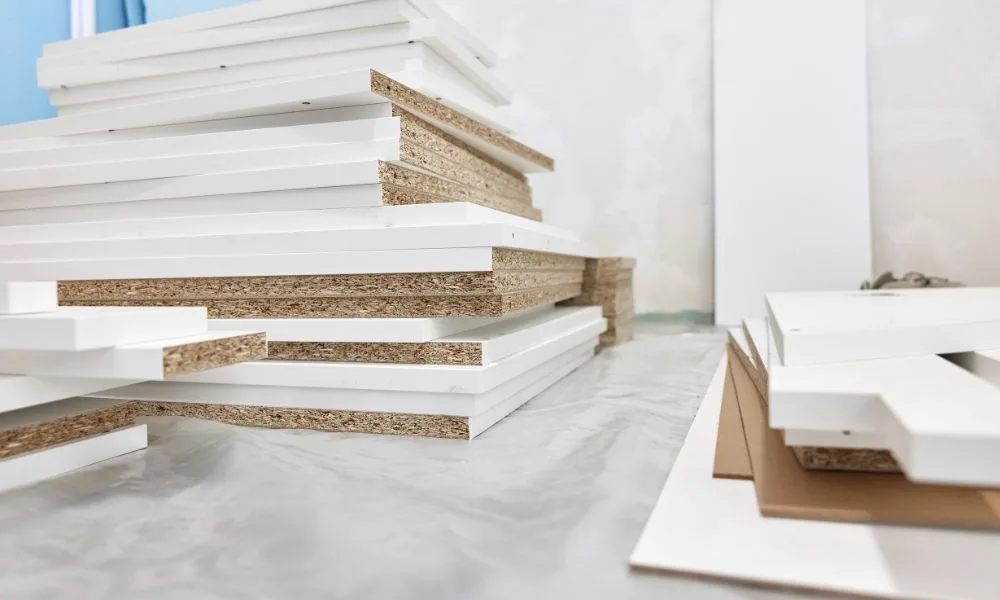
In dry rooms — bedrooms, living rooms, home offices — standard MDF performs well. It’s stable, takes paint beautifully, and is the more economical choice. In rooms with higher humidity or occasional water exposure, such as bathrooms, kitchens, or utility spaces, moisture-resistant MDF (commonly referred to as MR MDF) is the better option. It’s produced with resins that resist swelling and warping in damp conditions, making it significantly more durable in those environments.
It’s worth noting that moisture-resistant doesn’t mean fully waterproof. Cut edges and unsealed surfaces still need to be properly primed or painted, especially anywhere near showers, sinks, or steam sources.
Pulling it all together
Wall panelling is one of those relatively low-effort changes that can have a disproportionately large impact on how a room feels. Get the location, profile, colour, and specification right, and the result is something that genuinely looks considered and intentional.
If you’re looking for a quality starting point, mdf panels from Panels by Sofia offer a broad range of styles and finishes to suit both contemporary and traditional interiors — well worth exploring before you commit to a direction.