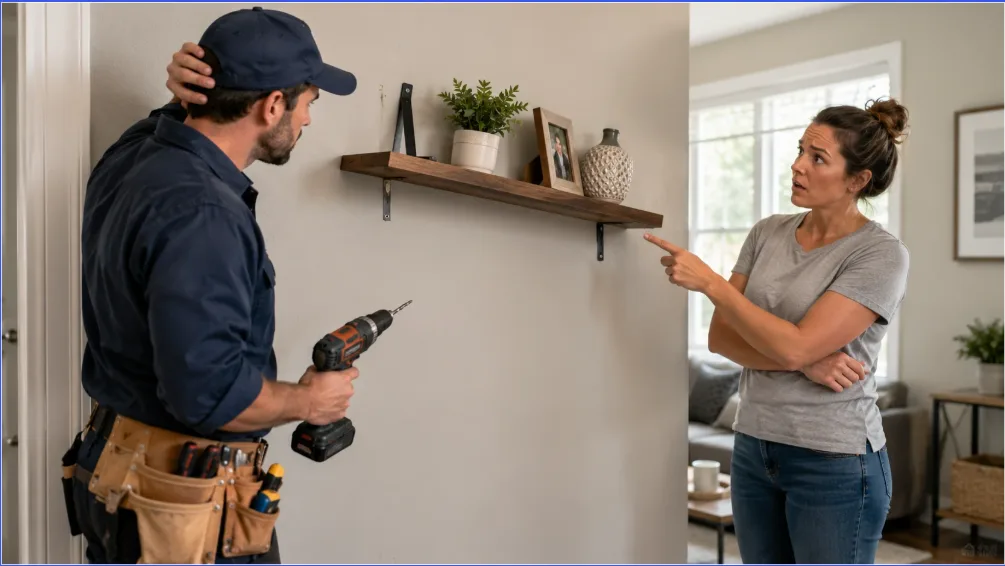
The fastest way to solve everyday household problems, improve the appearance of your home, or finish long-postponed tasks is to hire a handyman. BUT… Even small jobs can end up costing more and causing more stress than necessary if something goes wrong during the work—not to mention potential safety issues.
That is why it is just as important to know which things most often go wrong around the house as it is to find the right professional for the job.
The more you know about the common mistakes that are usually made during repairs, the greater the chances of success for your home repair services Chicago project. Poor preparation or choosing unsuitable materials causes most repair-related problems to occur much more often than many people think, and with a few proper planning steps, most of the mistakes mentioned in this article can be completely prevented.
We will provide a brief overview of many mistakes made during residential home repairs in Chicago, hoping to give you useful information before bringing your next great home improvement or home expansion idea to life.
How Small Problems Can Lead to Big Expenses
Repairs are not always simple. The cost of a repair is usually higher because of the way it is carried out rather than the cost of the repair itself. A loose cabinet, a cracked drywall wall, a leaking faucet, or a broken baseboard may seem like a simple task, but if you overlook important details during the repair, it can lead to much more serious problems in the long run.
Every home in Chicago has its own characteristics. Many older buildings may have numerous problems caused by prolonged exposure to water, such as worn-out plumbing systems, outdated electrical wiring, and/or uneven walls. Ignoring these issues can turn a simple repair into a major problem.
That is why professionals in the industry do not begin work immediately without first carrying out a complete inspection of the affected area, identifying the source of the problem, and developing a plan of action. This prevents the same issue from happening again and can save a significant amount of money on future repair work.
1. Fixing the Consequences Instead of the Cause
People often repair only what they can see. For example, if something looks cracked, they repair the visible cracks but do not eliminate the underlying cause of the damage (such as movement of the soil beneath the foundation).
For example, if you paint over a stain on the ceiling without fixing the source of the leak, the leak will most likely return after a short period of time. Likewise, replacing cracked drywall without properly eliminating the source of excess moisture or signs of structural movement usually causes the cracks to reappear within a few months.
The principle above applies to almost every situation related to your home.
If floor tiles have come loose, it may mean that the problem lies in the material underneath them.
Peeling paint often indicates excessive moisture.
Constantly clogged pipes may be a sign of a more serious problem in the plumbing system.
Damaged kitchen cabinets are sometimes the result of a hidden leak rather than normal wear and tear.
A quality repair always begins with proper diagnosis rather than fixing the visible signs of the problem. Eliminating the root cause first will ensure the results last much longer and will save the homeowner from paying for the same repairs again.
2. Choosing Materials Based Solely on Price
Wanting to save money is perfectly natural. However, the cheapest materials are not always the most cost-effective choice.
Inexpensive caulk may crack after the first winter in Chicago. Cheap fasteners may loosen over time because wood naturally expands and contracts with seasonal changes in humidity. Budget paint often requires more coats and begins to fade or peel much sooner than higher-quality alternatives.
The same applies to adhesives, drywall compounds, flooring underlayment, plumbing fixtures, and various types of hardware. Saving money on materials reduces the initial cost but often leads to more frequent repairs and additional expenses in the future.
A well-executed repair is always based on a balance between quality, durability, and cost rather than simply choosing the cheapest available materials.
3. Delaying Small Repairs Until They Become Major Problems
One of the most expensive mistakes homeowners make isn’t choosing the wrong contractor or buying poor-quality materials. It’s assuming that a small problem can safely wait another month—or another season.
A slow plumbing leak hidden behind drywall, cracked exterior caulking around a window, or a missing roof shingle rarely causes immediate damage. Because everything inside the house still appears normal, many homeowners postpone repairs until visible signs begin to appear. Unfortunately, by that point the original problem has often spread well beyond the area where it started.
Moisture is a good example. Water rarely remains where it first enters a building. It follows framing, insulation, and gravity, sometimes traveling several feet before staining drywall or damaging flooring. What begins as a relatively inexpensive repair can eventually require replacing insulation, drywall, trim, flooring, or even structural framing.
This pattern is reflected in national housing research. According to the Joint Center for Housing Studies at Harvard University, nearly 27 million owner-occupied homes across the United States require repairs, while deferred maintenance represents approximately $98 billion in needed work. The researchers note that postponing routine maintenance is one of the main reasons repair costs continue to increase over time.
Chicago homes are especially vulnerable to this problem. Many neighborhoods contain houses that are fifty, seventy, or even more than one hundred years old. Combined with freezing winters, humid summers, and constant freeze-thaw cycles, small defects in roofing, exterior sealants, plumbing, or siding often deteriorate much faster than homeowners expect.
Experienced contractors understand that successful repairs begin long before replacing damaged materials. Their first objective is identifying why the damage occurred in the first place. Solving the root cause is what prevents the same repair from being needed again a year later.
4. Assuming Every Repair Is a DIY Project
The internet has made home improvement more accessible than ever. Thousands of videos demonstrate how to replace drywall, install tile, repair plumbing, or upgrade electrical fixtures in just a few minutes. What those videos rarely show are the hidden conditions inside real homes.
A repair demonstrated on new construction is very different from the same repair performed in an older Chicago home. Walls may no longer be perfectly square, framing may have settled over decades, previous repairs may not meet modern building standards, and plumbing or electrical systems may have been modified several times over the life of the property.
Because of these variables, two repairs that appear identical on the surface often require completely different solutions.
This is one reason experienced professionals spend time inspecting surrounding materials before beginning work. They are looking for movement, moisture, structural changes, previous repairs, and signs that the visible damage may only be a symptom of a larger issue.
Attempting complex repairs without understanding these conditions can create problems that are significantly more expensive than the original defect. In many cases, homeowners are not paying professionals to replace drywall, install tile, or repair plumbing—they are paying for the experience needed to recognize problems before they become costly failures.
5. Not Asking Questions Before Hiring a Handyman
Most people, when choosing a handyman, focus only on the price, availability, or online reviews. However, they often overlook one important thing: they need to find out how the contractor plans to solve the problem. Asking a few technical questions before any work begins can reveal whether the professional intends to fix the root cause of the damage or simply cover up the visible signs.
A qualified expert should always explain what caused the damage, how the proposed repair will prevent the problem from happening again, and why specific materials and repair methods have been chosen. If the contractor responds with uncertainty, gives vague answers, or avoids the questions altogether, there is a risk that they will simply hide the problem while the underlying issue remains inside the structure.
This is especially important when moisture is involved. The U.S. Environmental Protection Agency (EPA) clearly states that the only effective way to stop mold from returning is to eliminate the source of moisture rather than simply removing visible damage. The agency also recommends drying water-damaged materials within 24 to 48 hours. Otherwise, the risk of mold growth increases significantly, and the building structure continues to deteriorate.
Building science experts support the same conclusion. Moisture trapped inside walls, ceilings, or floors continues to damage wood and other building materials even after the visible repair has been completed. Hidden moisture can easily lead to much more expensive repairs. It is common for someone to replace drywall or simply repaint a wall without addressing the underlying cause, only for the problem to return later in a much more serious form.
Final Thoughts
Expensive home repairs rarely begin with major failures. More often, they start with small problems: a slowly leaking pipe, deteriorating caulking, loose tiles, or the first signs of moisture. If these issues are not addressed promptly, they gradually spread to surrounding building materials and can increase repair costs several times over.
The smartest long-term investment is not simply repairing the visible damage but understanding what caused it in the first place. A thorough inspection, quality workmanship, and eliminating the real cause of the problem will almost always cost less than dealing with the same repair again a few months or years later.
If you would like to learn more about home repairs, common household problems, and home maintenance in Chicago, visit https://fixprosolution.com.
Whether you’re dealing with a minor repair or a major renovation, taking action early, asking the right questions, and addressing problems before they grow can help protect your home and save you money in the long run.