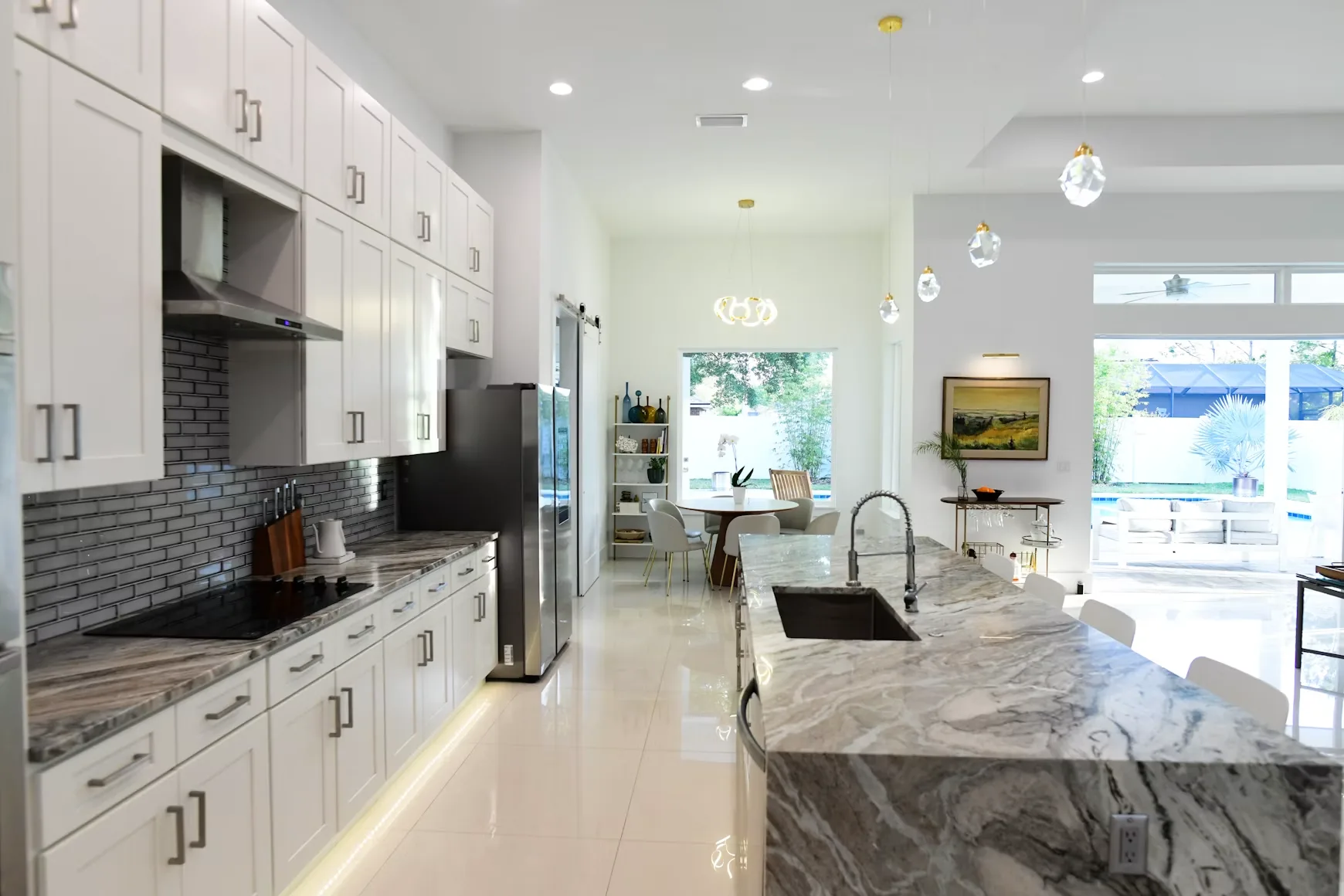
A modern German kitchen is defined by more than clean lines and minimalist styling. It combines precise engineering, intelligent storage, durable materials, and highly functional layouts to create a space that works efficiently while maintaining a refined architectural appearance.
For interior designers and contractors, German kitchen design offers a practical framework for creating kitchens that meet contemporary expectations for both aesthetics and performance. From handleless cabinetry to integrated appliances and sustainable materials, the latest trends focus on making every element purposeful.
Whether you’re designing a high-end residential project or specifying cabinetry for a whole-house renovation, understanding these trends can help you create kitchens that feel modern today while remaining relevant for years to come.
Here are 10 key design trends defining the modern German kitchen.
1. Handleless Cabinets for a Clean Architectural Look
One of the most recognizable features of a modern German kitchen is handleless cabinetry. Instead of traditional knobs and pulls, doors and drawers use integrated profiles, push-to-open mechanisms, or recessed grips.
The result is a continuous visual surface that makes cabinetry appear more like part of the architecture. This approach works particularly well in open-plan homes where the kitchen needs to blend naturally with living and dining areas.
For contractors, handleless systems can also simplify the visual specification process by creating a consistent appearance across different cabinet configurations. Interior designers can use the uninterrupted surfaces to reinforce minimalist or contemporary design concepts.
2. Flat-Panel Cabinetry and Minimalist Forms
Modern German kitchens typically emphasize simple geometric forms. Flat-panel doors, straight lines, and carefully controlled proportions create a sophisticated appearance without unnecessary ornamentation.
This minimalist approach doesn’t mean the kitchen has to look cold or sterile. Designers can introduce warmth through wood finishes, textured surfaces, lighting, flooring, and carefully selected hardware.
When selecting modern kitchen cabinets, consider how the door profile, finish, and proportions interact with architectural features such as flooring, windows, islands, and wall finishes. Consistency is essential to achieving the streamlined appearance associated with German kitchen design.
3. Smart Storage That Maximizes Every Inch
German kitchen design places strong emphasis on functionality. Storage is planned around how people actually use the kitchen rather than simply filling available wall space with cabinets.
Deep drawers, tall pantry units, pull-out storage, internal organizers, corner solutions, and dedicated appliance compartments help eliminate wasted space. Frequently used items can be positioned within easy reach, while less frequently used equipment can be stored in higher or deeper compartments.
For contractors and designers, this trend highlights the importance of planning storage during the early design phase. Cabinet dimensions, appliance locations, plumbing, electrical outlets, and circulation paths should be coordinated before installation begins.
4. Integrated Appliances for a Seamless Appearance
Another defining characteristic of a modern German kitchen is the integration of appliances into the cabinetry.
Refrigerators, dishwashers, ovens, coffee machines, and other appliances can be concealed behind matching cabinet fronts or incorporated into carefully designed appliance towers. This creates a cohesive visual composition and prevents appliances from dominating the room.
Integrated appliances are particularly effective in smaller homes and open-plan interiors. By reducing visual clutter, they allow cabinetry, countertops, and architectural details to become the primary design features.
For contractors, precise measurements and coordination are critical. Appliance specifications should be confirmed before cabinet production to ensure proper ventilation, clearances, electrical connections, and installation tolerances.
5. Large Kitchen Islands as Functional Centers
The kitchen island continues to be a major element in contemporary German kitchen design. However, today’s islands are designed to do more than provide additional countertop space.
A well-planned island can combine food preparation, storage, seating, cooking, and social interaction. Depending on the project, it may include a cooktop, sink, drawers, recycling systems, wine storage, or integrated seating.
Designers should consider circulation carefully when specifying a large island. Adequate clearance around the island is essential for comfortable movement and appliance access.
In larger residential projects, an oversized island can also serve as a visual anchor, connecting the kitchen with adjacent living spaces.
6. Natural Materials and Warm Neutral Finishes
While minimalist kitchens are often associated with monochromatic color palettes, contemporary German kitchens increasingly use natural-looking finishes to create warmth.
Wood-effect cabinetry, natural stone, stone-look surfaces, warm gray, beige, taupe, and muted earthy tones can soften the strong geometry of modern cabinetry.
The goal is balance. A designer might combine matte neutral cabinet fronts with a wood island, for example, or pair dark cabinetry with a light stone-effect countertop.
For interior designers, mixing materials is an effective way to add visual depth without compromising the clean aesthetic of a modern kitchen.
7. Matte Surfaces and Low-Reflection Finishes
High-gloss cabinetry has long been associated with contemporary European kitchens, but matte surfaces have become increasingly prominent.
Matte finishes provide a softer, more understated appearance while complementing minimalist architectural forms. They can also help reduce visible reflections, making the kitchen feel calmer and more sophisticated.
For busy residential projects, material selection should go beyond appearance. Designers and contractors should evaluate scratch resistance, cleaning requirements, durability, and suitability for the intended environment before specifying a finish.
8. Concealed Utility and Appliance Zones
Modern German kitchens are increasingly designed to hide functional elements when they’re not in use.
Pocket doors, tall cabinet walls, concealed coffee stations, appliance garages, and integrated utility compartments can keep countertops visually clear. A kitchen may look like a simple wall of cabinetry when closed, then reveal a highly functional preparation area when opened.
This approach is especially useful in open-plan homes. When the kitchen is visible from the living room, concealing small appliances and everyday clutter helps maintain a clean architectural appearance.
Contractors should account for door clearances, ventilation, internal electrical connections, and cabinet depths when incorporating concealed appliance zones.
9. Layered and Integrated Lighting
Lighting is another important component of modern German kitchen design. Rather than relying on a single ceiling fixture, contemporary kitchens often combine several lighting layers.
Under-cabinet lighting can illuminate work surfaces, while recessed ceiling fixtures provide general illumination. Pendant lighting can define an island, and interior cabinet lighting can make drawers and pantry storage easier to use.
Integrated LED lighting can also enhance the cabinetry itself. Subtle illumination beneath wall cabinets or inside tall units can create depth and improve the kitchen’s appearance after dark.
For contractors, lighting should be coordinated with cabinet specifications from the beginning. Planning cable routes, switches, power supplies, and LED profiles early can prevent installation complications later.
10. Sustainable, Durable, and Long-Term Design
Sustainability is becoming increasingly important in residential construction and renovation. A modern German kitchen responds by emphasizing durability, efficient use of materials, and long-term functionality.
For designers and contractors, sustainable kitchen specification can involve selecting durable cabinet materials, long-lasting hardware, energy-efficient appliances, and finishes that can withstand years of everyday use.
Designing for longevity is also a form of sustainability. A kitchen with timeless proportions, flexible storage, and durable finishes is less likely to require replacement simply because its layout or appearance has become outdated.
Bringing Modern German Kitchen Design Into Your Next Project
The defining characteristics of a modern German kitchen go beyond appearance. Its appeal comes from the combination of disciplined aesthetics and practical engineering.
Handleless cabinetry creates clean architectural lines. Intelligent storage makes better use of available space. Integrated appliances reduce visual clutter, while islands improve functionality and interaction. Natural finishes, matte surfaces, layered lighting, and durable materials add comfort without compromising the minimalist aesthetic.
A successful kitchen project often forms part of a larger interior design scheme. OPPOLIA offers whole-house cabinet customization, including kitchen, bedroom, bathroom, laundry, home office, and balcony spaces. This makes it possible to coordinate cabinetry styles and finishes throughout an entire residential project.
Explore OPPOLIA modern kitchen cabinets and discover solutions designed for contemporary residential interiors. Submit your project requirements and get a free quote today to start planning your next cabinetry project.