Key Highlights
- Fixed louvres suit projects that need a straightforward design, steady weather protection, and low maintenance.
- Adjustable louvres give you more control over natural light, airflow, and privacy in outdoor living areas.
- Your local weather conditions matter, especially in Sydney, coastal zones, and high-exposure sites.
- Aluminium louvres are a popular choice because they are durable and easy to maintain.
- Blade size, materials, and installation types all affect performance, comfort, and visual appeal.
- The right fit depends on how you want your outdoor area to work every day.
Introduction
Choosing between fixed and adjustable louvres can shape how your outdoor living space feels and functions. With aluminium louvres, the detail that matters most is how the louvre blades manage light, airflow, privacy, and weather. If you are planning a patio, balcony, façade, or screening feature, knowing the difference helps you choose a system that suits your project.
Understanding Fixed and Adjustable Louvres
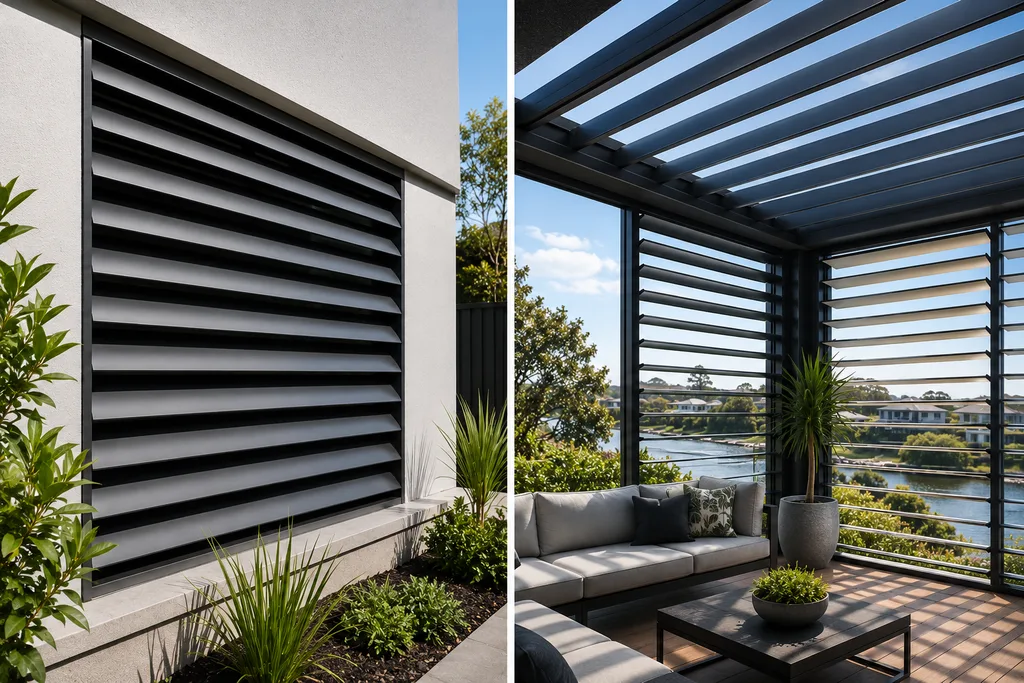
At the simplest level, fixed and adjustable louvres have distinct functionalities: fixed louvres stay at one set angle, while adjustable louvres can be moved to change how they perform. Both use louvre blades to help with weather protection, privacy, and appearance.
That said, they solve different problems. Fixed louvres are built for steady sun control and screening. Adjustable louvres are better when you want to fine-tune shade, breeze, and comfort through the day.
What Are Fixed Louvres?
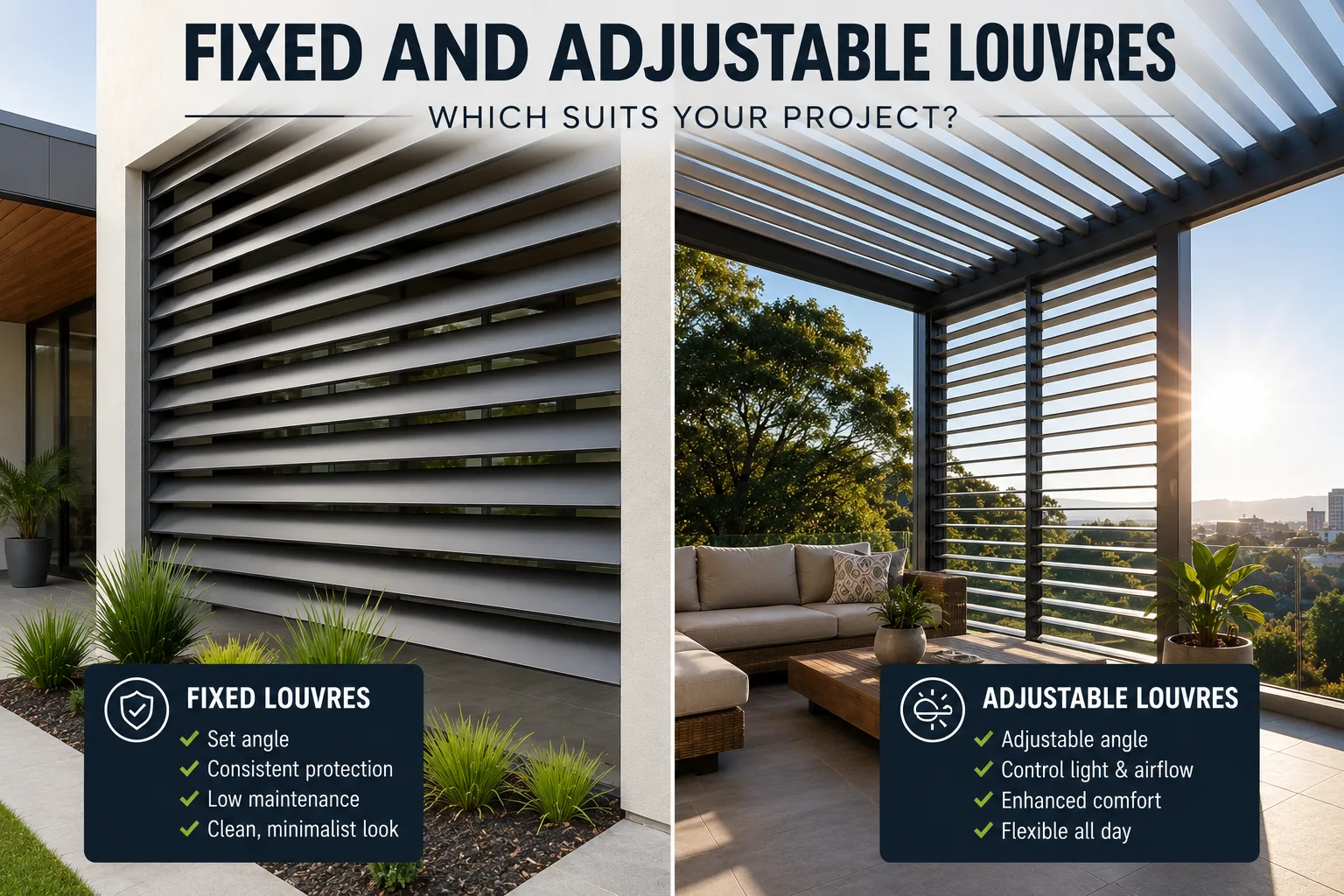
Fixed louvres feature blades set at a fixed angle and cannot be adjusted. This simple design is easy to understand and use.
They are ideal for areas requiring consistent screening or airflow, such as plant rooms, façades, balconies, and outdoor spaces where cover is needed without frequent adjustment.
Unlike adjustable systems, fixed louvres offer stable performance in varying weather conditions, along with a clean, minimalist appearance.
What Are Adjustable Louvres?
Adjustable louvres feature movable blades that let you control sun shading, airflow, and privacy as conditions change.
Simply open the blades for more light and breeze, or angle them to reduce glare and increase shade in outdoor areas like patios or BBQ spaces.
Their flexibility offers customised comfort throughout the day—welcoming morning light while blocking afternoon heat for a tailored outdoor experience.
Key Differences Between Fixed and Adjustable Louvres
The biggest difference is control. Fixed louvres keep the same blade position at all times, while adjustable louvres change angle to suit different conditions.
There is also a practical gap. Systems with moving parts can offer more flexibility, but fixed louvres often appeal when your functional needs are simple, consistent, and focused on minimal upkeep. A closer comparison makes that clearer.
Design and Functionality Comparison
If you want steady performance, fixed louvres are best. For flexible control, choose adjustable louvre systems. Your choice depends on how often the space needs to adapt.
For example, a commercial façade benefits from fixed louvres for simple shadow lines and screening. Patios used throughout the day may suit modern adjustable blades for changing conditions.
| Feature | Fixed Louvres | Adjustable Louvres |
| Blade position | Set angle | Adjustable angle |
| Best use | Consistent screening and airflow | Flexible light and ventilation control |
| Design feel | Simple design | Modern design |
| Components | Fewer moving parts | More moving parts |
| Materials | Durable, e.g., aluminium | Durable with operating hardware |
| Blade sizes | Chosen for static performance | Chosen for comfort and control |
How Each Type Handles Sunlight and Ventilation
Adjustable louvres allow you to change the blade angle, controlling sunlight and breeze as needed. Fixed louvres stay in one position, providing a constant effect throughout the day. This flexibility makes adjustable louvres popular for outdoor spaces exposed to strong sun.
For example, adjustable louvres suit balconies needing variable shade, while fixed blades are ideal for areas requiring steady ventilation.
- Fixed louvres offer consistent natural light filtering.
- Adjustable louvres adapt to changing sun conditions.
- Fixed systems provide passive airflow at a set angle.
- Adjustable systems let you control both airflow and shade.
Benefits of Fixed Louvres in Australian Projects
Across Australia, fixed louvres are often chosen for projects that need dependable performance without regular adjustment. They are especially useful in an outdoor area exposed to changing weather conditions.
Another reason is simplicity. With fewer operating elements, fixed louvres can offer strong weather resistance, a clean look, and low maintenance over time. Those strengths show up clearly in durability and cost.
Weather Resistance and Durability
Aluminium louvres can perform well in Sydney’s climate, provided they use weather-tested coatings and corrosion-resistant fittings. Product details show durable materials, tested coatings, and marine-grade stainless steel fixings for demanding sites.
This is essential in areas with harsh sunlight, heavy rain, and coastal air. Some systems are engineered for high-wind performance, built to withstand the demands of extreme environments.
- Paint coatings are tested against Australian weather.
- Fixings use marine-grade stainless steel suited to coastal and high-exposure conditions.
- Specialist blade design enhances rigidity and rain protection.
Cost Advantages and Simplicity
The main benefits of fixed louvre systems are their simplicity, low maintenance, and suitability for projects requiring minimal adjustment. This straightforward design also simplifies decision-making.
For example, in schools or warehouses where passive ventilation and screening are needed with little upkeep, fixed louvres are ideal.
- Fewer moving parts mean less maintenance.
- Their consistent setup is suited to long-term screening.
- Best for situations prioritising function over daily adjustment.
Advantages of Adjustable Aluminium Louvres
Adjustable aluminium louvres are built for projects where comfort changes during the day. They help you shape the outdoor experience by altering sun shading, airflow, and privacy when needed.
This makes them useful for patios, balconies, and other living zones. If your goal is flexibility with modern features, adjustable louvres usually offer more ways to fine-tune the space.
Customisable Shade and Privacy Control
Choose adjustable aluminium louvres for spaces with changing needs. They suit areas where sun, breeze, and privacy vary throughout the day.
For example, a balcony in a multi-residential building benefits from this flexibility. Enjoy more light in the morning, then adjust for greater privacy and less glare later—all without closing off the space.
- Adjustable blades control sunlight.
- They allow flexible outdoor living.
- Improve privacy while maintaining airflow.
Modern Features and Smart Home Integration
Many people choose adjustable louvre systems for their modern look, and today’s ranges often add smart home integration. Motorised blades can be controlled via app, remote, or wall switch for effortless adjustment.
- App or remote-controlled operation.
- Compatible with some smart home platforms.
- Optional sensors auto-adjust blades for rain or wind.
- Quiet, smooth motors suit modern outdoor spaces.
Factors to Consider When Choosing Louvres
The right louvre choice starts with how the space will be used. Your weather conditions, privacy needs, and daily comfort goals all matter.
Just as important are blade sizes, materials, and fixing options. In outdoor spaces, the best result comes from matching the system to your functional needs and local climate rather than picking on looks alone.
Climate and Weather Considerations for Sydney & Australia
Sydney and many Australian locations experience rainfall, glare, salt exposure, and prolonged harsh sunlight, making weather protection essential.
For sites with greater exposure, Australian-made aluminium louvres tested for local conditions are a smart choice. Some systems are designed with high-wind areas in mind, offering extra structural reinforcement for demanding sites
- Assess direct sun exposure.
- Check for rainfall and coastal air.
- Choose louvre types based on required weather protection.
Blade Size, Material, and Installation Types
Blade size affects both the appearance and performance of a louvre. Larger blades alter screening, rigidity, and airflow, so they should suit the project’s needs rather than trends.
Material choice is also key. Aluminium louvres offer durability, while stainless steel fixings ensure long-term performance in exposed areas. Installation options differ too, with blades fitted horizontally or vertically.
- Match blade size to airflow and screening requirements.
- Use aluminium and stainless steel for greater durability.
- Select installation types to suit the building’s design and function.
Conclusion
In summary, the choice between fixed and adjustable louvres depends on your project needs and preferences. Fixed louvres are durable and low-maintenance, ideal for simple applications. Adjustable louvres offer flexibility to control sunlight and ventilation—useful in Australia’s variable climate. Consider climate, design, and function to choose the best option. For tailored advice, contact us for a consultation.
Frequently Asked Questions
When should I choose adjustable louvres over fixed louvres?
Opt for adjustable louvres when your outdoor space requires varying sun control, airflow, or privacy throughout the day. They are ideal for patios, balconies, and areas where comfort and privacy need to be flexible.
Are aluminium louvres suitable for harsh Australian weather?
Yes, aluminium louvres are well suited to Australian conditions when they are made for the local climate. Strong weather resistance, tested coatings, and stainless steel fixings help them handle harsh sunlight, rain, and exposed coastal settings.
Can adjustable louvre systems be added to an existing outdoor area?
Yes, adjustable louvre systems can be fitted to existing outdoor areas if the installation suits the structure and intended use. The main consideration is selecting a setup that ensures smooth operation and easy maintenance, as demonstrated by Elipso Louvres.