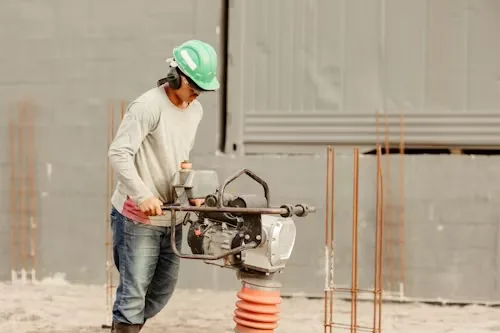
A jackhammer is a percussion tool designed to break hard materials through repeated impact. It can work on concrete, asphalt, masonry, compacted ground, and some types of hard soil. For trenching, the tool is often used to loosen material before it is removed with a shovel or excavation machine. A jackhammer tool is especially useful when normal digging tools cannot easily penetrate a hard surface.
Trenching may involve several different materials within the same work area. You might encounter pavement at the surface, dense soil underneath, and hard clay or small rock farther down. The right attachment can make a major difference because different bits are designed for different breaking and cutting tasks.
When a Jackhammer Makes Sense for Trenching
A jackhammer is most useful when the material is too hard for normal excavation methods. It can loosen concrete sections, break asphalt, split hardpan, and soften compacted areas before the loose material is removed. This makes it useful for utility trenches, drainage work, repair projects, and other jobs where a narrow excavation must pass through a hard layer.
It is important to understand that a jackhammer does not replace every excavation method. Loose soil is usually easier to remove with a shovel, trenching bucket, or suitable excavation equipment. The breaker is mainly useful for hard sections that resist ordinary digging.
Choosing the Right Jackhammer for the Job
The size and design of the breaker should match the material and working conditions. A small demolition hammer may work well for lighter surface breaking, while a heavier model can handle thicker concrete and dense ground. Weight, impact energy, power source, handle design, and vibration control all affect how manageable the tool will be during trenching.
Electric, pneumatic, hydraulic, and petrol powered models are available. Electric models can be practical where suitable power is available, while pneumatic breakers depend on an air compressor. Hydraulic breakers are generally associated with excavators and larger earthwork operations.
Picking the Correct Chisel Bit
The bit should match the material rather than being selected only by size. A pointed bit concentrates impact into a small area, making it useful for starting breaks and penetrating hard sections. Flat and spade style attachments can help with cutting, shaping, or loosening certain materials. A clay spade is designed for loosening compacted clay and similar ground.
For trenching, a jack hammer for trenching may need to work through several material types during one project. A point chisel can help open a hard layer, while another attachment may be better for cutting or loosening a wider section. Always check that the bit shank matches the tool’s chuck system before installation.
Preparing the Trench Area Before Breaking
Good preparation makes the actual breaking work easier. First, identify the planned trench route and remove loose objects from the working area. Check for known underground utilities before starting excavation, because breaking into an electrical, gas, water, or communication line can create serious hazards.
The work area should also provide enough space for stable footing and controlled tool movement. Avoid placing unnecessary equipment around the trench opening. If the surface contains concrete or asphalt that must remain intact beside the trench, controlled cutting can help limit unwanted damage before impact work begins.
How to Use a Jackhammer in a Trench
Start by positioning the bit against the section that needs to be loosened. Keep both hands on the tool and maintain a balanced stance before applying pressure. Let the impact mechanism do most of the breaking instead of forcing the machine downward. Excessive pressure can make the tool harder to control and may reduce effective impact.
Work in manageable sections rather than trying to break a large area at once. Create an opening, remove loosened material, and then continue into the next section. This approach gives the operator better visibility and helps prevent broken material from building up around the working point.
Managing Hard Clay and Compacted Ground
Hard clay can behave differently from concrete or asphalt. Instead of shattering immediately, dense clay may resist the bit and hold together around the impact point. A suitable spade or pointed attachment can help loosen the material so it can then be removed from the trench.
The same principle applies to compacted soil and hardpan. Break the resistant layer in smaller sections and remove loosened material as you progress. A jackhammer tool can assist with this work, but it should not be treated as a replacement for proper excavation and material removal techniques.
Breaking Concrete and Asphalt in a Trench
Concrete often requires concentrated impact because its strength makes broad surface pressure less effective. Starting near an edge or an existing opening can help create a fracture path. Pointed bits are commonly used for concentrated breaking, while wider attachments can help with cutting or shaping certain surfaces.
Asphalt usually behaves differently because it is more flexible than concrete. An asphalt cutting attachment can help establish a cleaner edge before material is removed. For trench work near existing pavement, controlled cutting can reduce unnecessary surface damage and make restoration easier later.
Safety Practices That Should Not Be Skipped
Jackhammer work produces noise, vibration, flying fragments, and dust. Operators should use suitable eye, hearing, hand, foot, and respiratory protection based on the work environment and applicable requirements. OSHA notes that jackhammer operation can generate respirable crystalline silica when breaking concrete, stone, masonry, and similar materials.
Dust controls can include continuous water application at the impact point or a suitable shroud connected to a vacuum collection system. Hearing protection is also important because jackhammers can expose workers to damaging noise levels. Keep other workers away from the immediate breaking zone and maintain clear communication around the excavation.
Inspecting the Tool Before Work
A quick inspection can identify problems before the breaker is placed under load. Check the bit for cracks, deformation, or excessive wear, and make sure it is properly secured in the chuck. Electric models should have an intact power cord, while pneumatic equipment requires attention to hoses and connections.
Look at handles, fasteners, guards, and other external components as well. Unusual vibration, noise, weak impact, or visible damage can indicate that the tool needs attention. Inspection guidance also recommends checking the power system, bit assembly, lubrication, and general condition before operation.
Keeping the Breaker Ready for Repeated Use
Maintenance requirements vary by tool design and manufacturer. Common tasks include cleaning the tool, inspecting the bit, checking fasteners, maintaining lubrication, and examining power or air connections. Pneumatic models may need additional attention to air filters, moisture, hoses, and lubrication systems.
A worn chisel can affect performance and may make breaking harder than necessary. Replace or service damaged components according to the tool manufacturer’s instructions. Regular checks are particularly important when equipment is used in dusty environments or for extended periods.
Common Mistakes During Trenching
One common mistake is choosing a breaker based only on motor power. A tool that is too heavy can become difficult to control, while an undersized model may struggle with the material. The attachment also matters because the wrong bit can make a suitable machine less effective.
Another mistake is applying excessive downward force. The breaker is designed to generate repeated impacts, so forcing it can increase operator fatigue without producing better results. Working in short sections, maintaining a stable stance, and removing broken material regularly can make the process more controlled.
Jack Hammer for Trenching or Excavator Breaker?
Handheld breakers are useful when the operator needs precise control in a smaller work area. They can reach sections where larger equipment cannot easily operate. This makes them useful for repairs, narrow work zones, surface breaking, and smaller trenching tasks.
Hydraulic breakers attached to excavators are more suitable for larger breaking operations. They can deliver substantial impact energy while keeping the operator inside the excavator cab. These systems are commonly used for rock, concrete, asphalt, demolition, and larger trenching operations.
Tips for Better Trenching Results
Plan the trench route before starting impact work. Choose the bit according to the material and keep the tool properly supported during operation. Break resistant areas gradually and remove loosened material before continuing deeper.
Do not ignore changes in material as the trench progresses. A surface layer of asphalt may require different treatment from compacted clay below it. Adjusting the attachment and technique to the material can improve control and reduce unnecessary effort.
Frequently Asked Questions
Can a jackhammer be used for trenching?
Yes. It can loosen hard clay, compacted ground, asphalt, concrete, and other resistant materials before excavation continues.
Which bit is useful for trenching?
A point chisel is useful for concentrated breaking, while clay spades and other specialized attachments can help with compacted soil and clay.
Can a jackhammer break concrete in a trench?
Yes. A suitable breaker can fracture concrete and help expose sections that need to be removed. The correct bit and controlled working method are important.
How should jackhammer dust be controlled?
Water applied continuously at the impact point or a suitable vacuum shroud can help control silica dust during applicable breaking work.
What should be checked before using a jackhammer?
Inspect the bit, chuck, handles, fasteners, power connections, hoses, and other components. Do not use damaged equipment until the problem has been properly addressed.