
Hiring a contractor in 2026 is nothing like it was five years ago. Material costs are still volatile, labor is tight in most markets, and a growing share of homeowners are tackling renovations after buying overpriced properties with deferred maintenance baked in. The stakes are higher. So are the risks. This piece breaks down five financial mistakes that keep draining homeowners dry — and how to stop making them before the first nail goes in.
The Paperwork Problem Nobody Talks About
Here’s a scenario that plays out constantly. You hire someone to redo your bathroom. Work starts, things look fine. Then a dispute comes up and you realize your “agreement” was a string of text messages and a handshake.
Contractors who run lean operations sometimes use basic digital tools to manage billing and client communication. The good ones — especially smaller independents — have moved to platforms like invoicing software for small business that generate proper paper trails, itemized estimates, and payment records. If your contractor can’t produce a clean written estimate with line items before work starts, that’s not a style preference. That’s a red flag.
What a solid contract should include:
- Full scope of work with materials specified (brand, grade, quantity where relevant)
- Payment schedule tied to milestones, not just calendar dates
- Start and estimated completion dates
- What happens if costs go over — who absorbs what, and by how much
No contract, no work. Full stop.
Mistake #1: Paying Too Much Upfront
The standard ask from a reputable contractor is 10–30% upfront for materials. Some go a bit higher on larger jobs. Fine. But if someone shows up and wants 50% before a single tool touches your wall — pause.
This is how renovation scams work. Not always. But often enough that every state contractor licensing board in the US has published warnings about it. The pattern is consistent: large deposit, work begins, then stalls, then the contractor disappears or delivers something unusable and demands more money to finish.
California, for instance, caps upfront deposits at $1,000 or 10% of the total contract price — whichever is less — for licensed contractors. That cap exists for a reason. It’s based on years of consumer complaints.
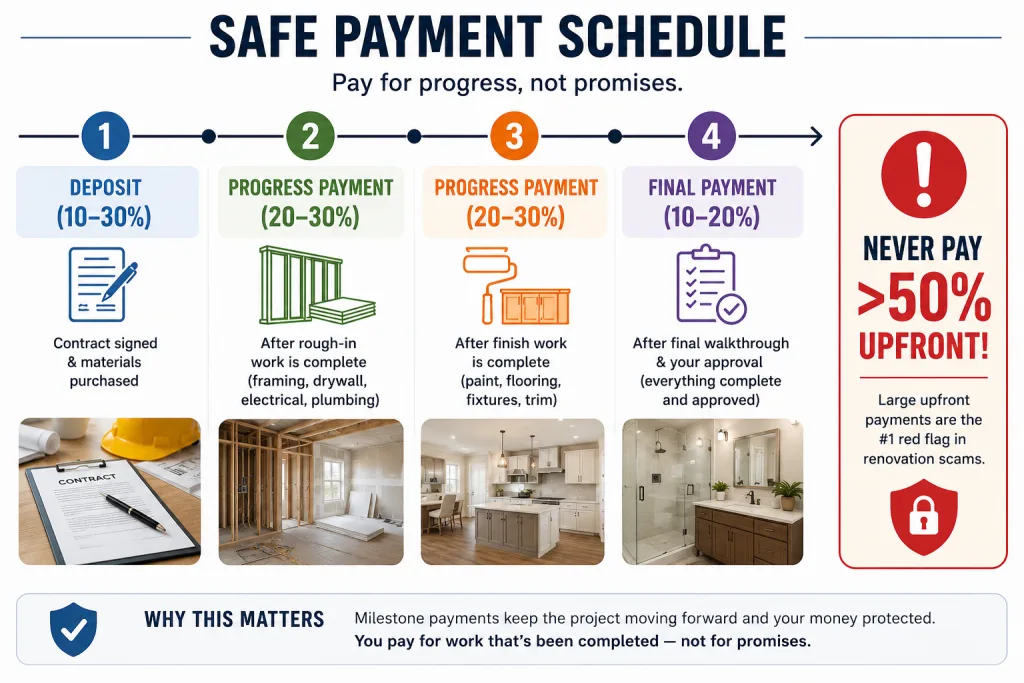
Structure payments around progress. Framing done? Pay the next installment. Drywall up and inspected? Another payment releases. Final walkthrough approved? Last check goes out. That structure protects you without being adversarial about it — most legitimate contractors are used to milestone billing.
Mistake #2: Skipping the License and Insurance Check
This one seems obvious. It isn’t, apparently, because it keeps happening.
A 2024 survey by the National Association of the Remodeling Industry found that a significant share of homeowners don’t verify contractor credentials before signing anything. They rely on referrals, Google reviews, or the guy who “did my neighbor’s kitchen.” That might work out. It also might leave you holding the liability when an uninsured worker falls off a ladder in your backyard.
Two things to verify before you agree to anything:
- Contractor’s license. Every state has an online lookup. Takes two minutes. If they’re not licensed for the type of work being done — electrical, plumbing, general contracting — you’re exposed.
- General liability and workers’ comp insurance. Ask for a certificate of insurance, not just a verbal confirmation. Call the insurance company to verify it’s active. Policies lapse. Contractors sometimes forget to renew. It’s not personal — it’s just due diligence.
Homeowner’s insurance typically won’t cover damage caused by an unlicensed contractor. That detail tends to surface at the worst possible time.
Mistake #3: Ignoring the Permit Question
Permits are annoying. They cost money, slow things down, and require inspections at inconvenient times. So when a contractor says “we don’t need a permit for this,” it’s tempting to believe them. Easier for everyone, right?
Wrong. Here’s what actually happens.
You sell the house in three years. The inspector flags unpermitted work — a new bathroom addition, an electrical panel upgrade, a structural wall removed. Now you’re either disclosing it (which tanks your price), getting retroactive permits (expensive and not always possible), or tearing out finished work for an inspection. None of those outcomes are cheap.
Permits aren’t just bureaucratic overhead. They trigger inspections, and inspections catch mistakes — sometimes serious ones — before they’re buried behind drywall. A licensed electrician who wired something wrong would rather catch it at inspection than have it cause a fire at 2 AM.
If a contractor is actively discouraging permits on work that typically requires them, ask why. The answer tells you a lot.
Mistake #4: Not Getting Multiple Bids Or Getting Too Many
Three bids. That’s the number most renovation consultants recommend, and it’s a reasonable baseline. One bid gives you no context. Two creates a binary choice. Three gives you a spread.
What you’re comparing isn’t just price. It’s:
- How detailed is the estimate? (Vague line items hide markups.)
- What materials are specified? (“Tile” and “premium porcelain tile from a US supplier” are not the same line item.)
- What’s included in cleanup and disposal?
- Does the timeline seem realistic, or is someone low-balling to win the job?
The lowest bid is almost never the best option. This isn’t a platitude — it’s the pattern. Low bids either reflect cut corners, cheap materials, or an intention to hit you with change orders once you’re committed and mid-project.
On the flip side, collecting six or seven bids wastes everyone’s time and signals that you’re a tire-kicker. Contractors talk. Being known as someone who shops endlessly and never commits makes serious professionals deprioritize your project.
Three solid bids from licensed, insured contractors with references. That’s the move.
Mistake #5: Letting Scope Creep Eat Your Budget
You started with a kitchen remodel. Somewhere around week two, the conversation expanded to “while we’re at it, the backsplash in the hallway, and maybe just update the powder room while the plumber’s already here.” Sound familiar?
Scope creep is the single most reliable way to blow a renovation budget. Not fraud. Not materials costs. Scope creep. And most of the time, the homeowner is driving it.
Every addition to the original scope should go through the same process as the original contract. Written change order. Cost estimate. Sign-off before work begins. This isn’t paranoia. It’s how professional project management works, whether you’re building a custom home or managing a software rollout.
Specialty contractors have started using industry-specific tools to track this. A pressure washing company managing a multi-property commercial contract, for example, might use dedicated job management software — you can see how that kind of scheduling and job-tracking works at https://mrtask.com/industries/pressure-washing-software. The concept scales. Any contractor doing ongoing residential work benefits from the same kind of structured job and change-order tracking.
The practical rule: if it wasn’t in the original scope document, it needs a new written agreement before work starts. No exceptions.
A Quick Reality Check on “Good Deals”
The renovation market in 2026 is full of contractors offering suspiciously quick availability and below-market pricing. Some of them are genuinely good — smaller operations building a reputation, or established pros with a slow quarter. Some of them are not.
When a deal seems too good, ask why they’re available. A busy, skilled contractor in most metro markets has a backlog. That’s just supply and demand. If someone can start Monday and is 30% below every other bid, something is either unusually right or unusually wrong. Worth knowing which.
Check Google reviews, yes. But also check the Better Business Bureau, your state contractor licensing board for complaints, and ask for three references from projects completed in the last 12 months. Then actually call those references.
Before You Sign Anything
Renovation money is hard to get back once it’s gone wrong. The legal process is slow, small claims court has limits, and “I thought we had an agreement” doesn’t hold up to much scrutiny without documentation.
The mistakes above aren’t obscure edge cases. They happen constantly, to people who aren’t careless or naive — just busy, trusting, or unfamiliar with how the industry actually operates. Knowing the patterns in advance is the cheapest protection available.
So. Before you sign the next contract: verify the license, read the scope line by line, confirm insurance, set up milestone payments, and get the permit question answered in writing. That list won’t guarantee a perfect renovation. But it will significantly reduce the chances of the kind of expensive surprises that make homeowners swear off contractors for years.