20 Stunning Sage Green House Ideas for Exterior & Interior

A sage green house offers the perfect balance between timeless charm and modern elegance. This soft, muted gray-green shade works beautifully on both exteriors and interiors, blending naturally with wood, stone, and crisp trim colors.
Whether you love modern farmhouse, coastal, craftsman, or classic colonial styles, sage green adapts effortlessly. In this guide, you’ll discover 20 stunning sage green house ideas, expert color pairings, paint recommendations, and practical tips to choose the perfect shade.

10 Sage Green House Exterior Ideas
From modern farmhouses to cozy cabins, sage green works beautifully on many architectural styles. Explore these inspiring exterior ideas.
1. Sage Green with Crisp White Trim

Pairing sage green siding with bright white trim is a classic move. The white outlines windows, doors, and rooflines beautifully. It works on ranch homes, colonials, and craftsman styles. This combo never goes out of fashion.
2. Sage Green with Black Shutters and Trim
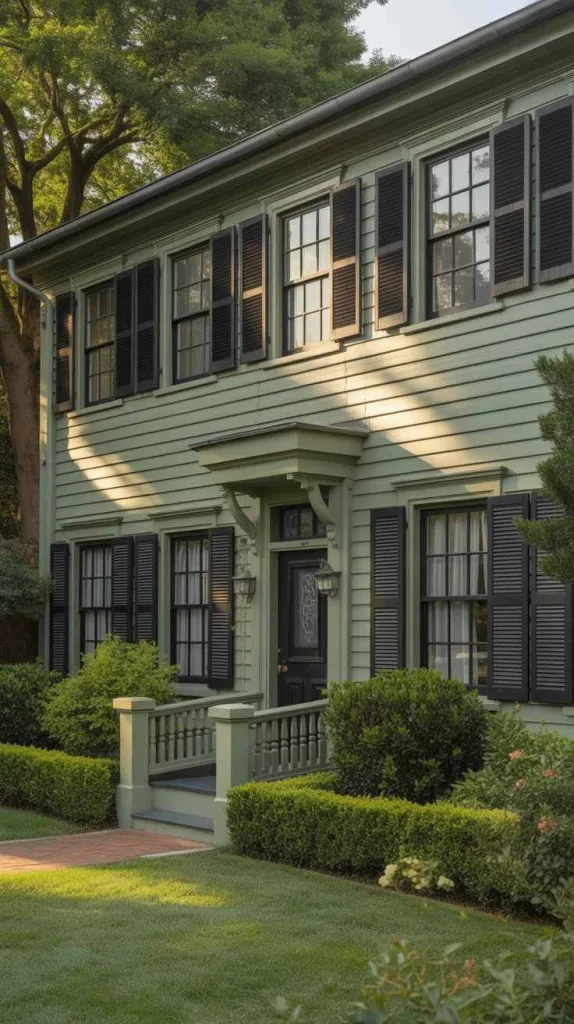
Bold black shutters against sage green siding create a striking modern contrast. Extend black to the front door, light fixtures, and garage doors for a cohesive, high-end look. Best for farmhouse and contemporary homes.
3. Dark Sage Ranch House
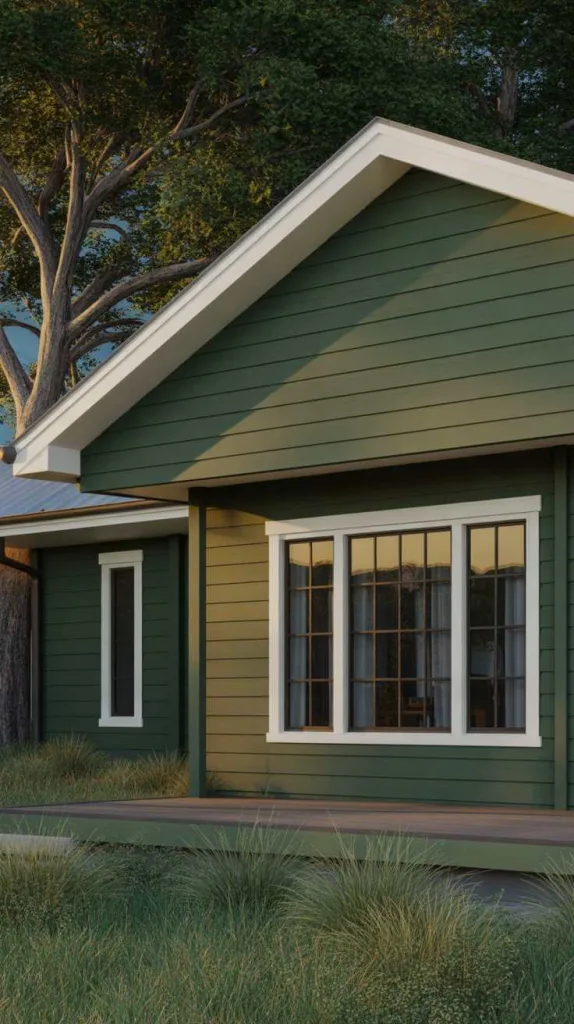
Deep, dark sage green siding blends naturally into surrounding landscape. Add a charcoal roof and white trim to keep balance. This earthy, grounded look is ideal for ranch-style homes in wooded or rural settings.
4. Sage Green Farmhouse with Board and Batten

Vertical board and batten siding in sage green is a modern farmhouse classic. Pair with black metal roofing, white columns, and a wraparound porch. Barn-style details like sliding garage doors complete the look.
5. Sage Green Coastal Home

Bright, slightly bluer sage green works perfectly for beach or coastal homes. Pair with white trim and navy shutters for a fresh, seaside vibe. This combination feels light, airy, and welcoming from the curb.
6. Sage Green Colonial with Red Accent Shutters

Colonial homes have symmetrical layouts and evenly spaced windows. Sage green siding paired with deep red or burgundy shutters creates a striking, patriotic look. The light siding highlights architectural details naturally.
7. Sage Green with Natural Wood Accents

Combining sage green siding with warm cedar or oak wood elements adds organic warmth. Use wood for the front door, shutters, pergola, or window trim. This pairing feels both natural and sophisticated.
8. Sage Green with Cream Trim and Stone Features
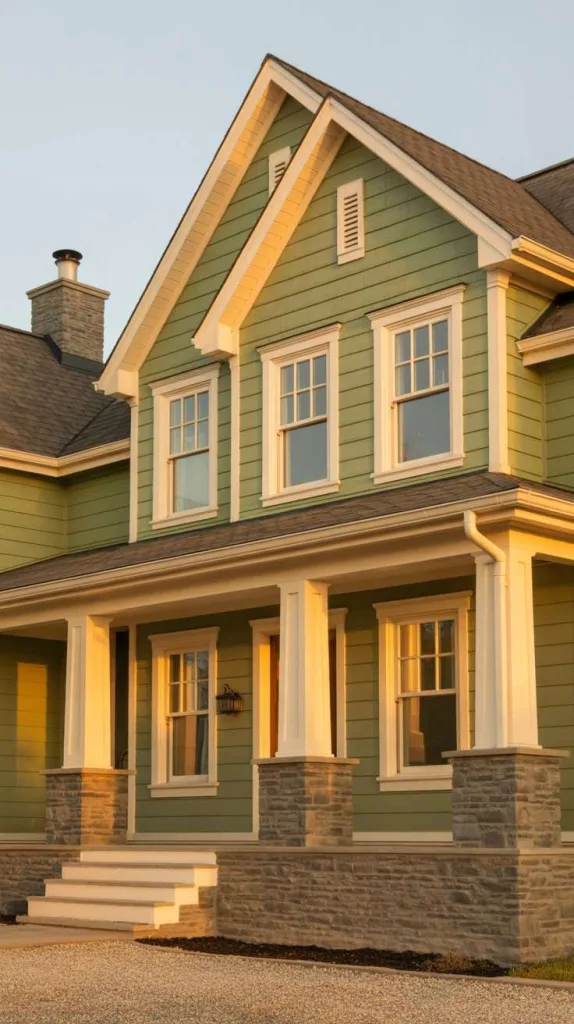
Cream trim on sage green siding creates a softer, warmer contrast than white. Add natural stone columns or accents for a refined, upscale look. This combination has a vintage charm that suits craftsman and cottage homes.
9. Two-Tone Sage Green Victorian

Victorian and multi-level homes look stunning with two shades of sage green. Use a lighter tone on upper levels and a darker shade near the base. Add muted dusty red or cream accents to highlight ornate architectural details.
10. Rustic Sage Green Cabin

Sage green is a natural fit for cabins and mountain homes. Its muted tone mimics the forest around it. Pair with cedar shake siding, stone columns, and a dark roof. Add warm wood porch railings to complete the rustic feel.
10 Sage Green House Interior Ideas
Sage green brings calm, warmth, and natural elegance into any room. Here are ten beautiful ways to use it inside your home.
1. Sage Green Kitchen Cabinets

Sage green cabinets add warmth without overwhelming a kitchen. Pair with marble countertops for luxury, or butcher block for a rustic touch. Brass or gold hardware complements the earthy tone beautifully.
2. Sage Green Living Room Walls

Sage green walls in a living room create a calm, inviting atmosphere. Combine with cream or white trim, warm wood floors, and linen furniture. Add terracotta or mustard accents for depth and visual interest.
3. Sage Green Bedroom Accent Wall

A single sage green accent wall in the bedroom adds color without feeling too bold. Pair with white bedding, warm lighting, and natural wood furniture. This creates a serene retreat that feels spa-like and restful.
4. Sage Green Bathroom Tiles

Sage green subway or zellige tiles in a bathroom feel both trendy and timeless. Pair with white grout, brushed brass fixtures, and a warm wood vanity. Small sage green details like towels or mats also work well.
5. Sage Green Front Door (Interior View)

A sage green front door creates a welcoming, stylish focal point. Inside, it connects the exterior palette to your interior design. Add brass hardware, a seasonal wreath, and potted plants for full effect.
6. Sage Green Open-Plan Kitchen and Dining

In open-plan spaces, sage green island cabinetry anchors the kitchen without dividing the room. Pair with white upper cabinets and natural wood open shelving. This balance keeps the space feeling bright and cohesive.
7. Sage Green Home Office

Sage green walls in a home office promote focus and calm. Studies suggest green tones can reduce mental fatigue. Add warm desk lighting, natural wood shelving, and plants for a productive, grounded workspace.
8. Sage Green Laundry Room

Sage green cabinetry or walls transform a functional laundry room into a pleasant space. Pair with white appliances, open shelving, and small patterned tiles. It turns a chore room into somewhere you actually enjoy spending time.
9. Sage Green Nursery or Kids Room

Sage green is a gender-neutral nursery choice that feels gentle and calm. It pairs beautifully with warm white, soft blush, or natural wood tones. Unlike bold colors, sage green stays appropriate as children grow.
10. Sage Green Patio and Outdoor Living Space

Sage green outdoor furniture or accent walls tie the interior palette to your garden. Use sage green cushions, planters, or painted walls on a covered porch. Warm wood decking and string lights complete the outdoor room.
Best Sage Green Paint Colors for Your Home
Choosing the right shade matters. Sage green ranges from warm olive tones to cooler gray-greens. Test samples in natural light before committing. Here are some top recommended options:
| Paint Brand | Color Name | Undertone | Best For |
| Sherwin-Williams | Retreat | Gray-Green | Exteriors & Living Rooms |
| Benjamin Moore | Sage Tint 2144-40 | Cool Gray | Bedrooms & Bathrooms |
| Behr | Sage Green T18-15 | Warm Olive | Kitchens & Cabinets |
| PPG | Light Sage | Cool Green | Coastal Exteriors |
| Farrow & Ball | Mizzle No.266 | Blue-Green | Feature Walls |
What Colors Go Best with Sage Green?
Sage green is a neutral at heart. Its gray base makes it flexible and easy to pair. Here are the best color combinations:
| Accent Color | Effect | Where to Use |
| Crisp White | Classic, clean contrast | Trim, ceilings, shutters |
| Black | Bold, modern drama | Doors, windows, fixtures |
| Cream / Off-White | Soft, warm elegance | Trim, interior walls |
| Charcoal Gray | Sophisticated depth | Roofing, shutters |
| Natural Wood / Cedar | Warm, organic feel | Doors, decking, beams |
| Terracotta / Dusty Red | Earthy, boho contrast | Accents, planters |
| Navy Blue | Coastal, striking combo | Front doors, shutters |
| Blush Pink / Soft Coral | Romantic, fresh look | Interior accents |
How Much Does It Cost to Paint a Sage Green House?
Exterior painting costs depend on your home’s size, siding type, number of stories, and local labor rates. Here is a clear breakdown based on 2025 data:
| Home Size | Estimated Cost | Notes |
| 1,000 sq ft | $1,500 – $4,000 | Single-story, minimal prep |
| 1,500 sq ft | $2,250 – $6,000 | Varies by height and condition |
| 2,000 sq ft | $3,000 – $8,000 | Two-story adds 50% to labor |
| 3,000 sq ft | $4,500 – $12,000 | May require scaffolding |
Here is the cost for different siding types;
| Siding Type | Cost per Sq Ft |
| Vinyl Siding | $1.50 – $4.50 |
| Wood Siding | $1.50 – $5.00 |
| Brick | $2.50 – $5.00 |
| Stucco | $2.00 – $5.00 |
| Aluminum / Metal | $2.00 – $4.50 |
Premium paint brands like Sherwin-Williams Duration or Benjamin Moore Aura cost $70–$100+ per gallon but offer better fade resistance — important for sage green which can shift toward gray if low-quality paint is used.
Pro Tip: The best time to paint your exterior is late spring through early fall, when temperatures stay between 50°F and 85°F. This ensures proper curing and long-lasting results.
What Is Sage Green and Why Is It Such a Popular House Color?
Sage green is a soft, muted gray-green. It takes its name from the herb — the same dusty, silvery-green color you see on the leaves of a sage plant. It sits between gray and green on the color wheel, which is exactly why it works so well as a neutral on a house.
It is not a loud color. It is calm, earthy, and timeless. Sage green does not shout for attention — it draws the eye gently and holds it. That quality is what makes it so universally liked.
Why Has Sage Green Become So Trendy for Houses?
Sage green first broke into mainstream interior design around 2019 and spread to exteriors quickly after. Ashley Banbury, color marketing manager at HGTV Home by Sherwin-Williams, explains why it resonates: the softness of sage green helps reduce stress and encourages relaxation. Homes are becoming sanctuaries, and consumers are looking for colors that inspire calm and peace.
Benjamin Moore named October Mist — a sage green — its Color of the Year in 2022. Sherwin-Williams named Evergreen Fog (a gray-green sage) its Color of the Year the same year. Both choices reflected the same cultural shift toward nature-inspired, calming colors after years of rapid change.
Note for 2025 onward: Homes and Gardens reports that some designers are now shifting from pure sage to deeper olive greens for a richer, more sophisticated look. But sage green remains one of the most requested exterior colors and is still a safe, long-term choice for curb appeal.
What Is the Difference Between Light Sage, Sage, and Dark Sage Green?
| Shade | Tone Description | Best Suited For | Example Paint |
| Light sage green | Soft, airy, silvery-gray-green | Small homes, coastal, farmhouse | SW Svelte Sage, BM October Mist |
| True sage green | Balanced — not too light or dark | Most house styles, versatile | BM Thornton Sage, BM Saybrook Sage |
| Dark sage green | Deep, moody, olive-leaning green | Ranch, craftsman, modern, cabin | BM Sage Mountain, SW Evergreen Fog |
Sage Green House Color Schemes: Which Trim and Accent Colors Work Best?
The trim color you choose has more impact on the final look of a sage green house than almost any other decision. Here is a full breakdown of every major combination — what it looks like, when to use it, and what to avoid.
Sage Green House with Black Trim — The Modern Contrast Look
Sage green with black trim is the most popular combination on social media and home design platforms right now. The contrast is striking but not harsh — because sage green is soft and muted, black trim creates definition without overwhelming the palette.
According to Allura USA, gray, black, and sage green are natural partners in modern design. The dark tones make sage almost appear deeper, shifting its character from soft and pastoral to clean and contemporary. This pairing works on board-and-batten siding, modern farmhouses, and ranch homes especially well.
- Best use: board-and-batten siding, modern farmhouse, ranch, and craftsman styles.
- Trim paint: Benjamin Moore Black (2132-10), Sherwin-Williams Black Magic SW 6991.
- Add: black window frames, black gutters, and a charcoal or black front door to complete the look.
- Avoid: pairing black trim with very light sage — the contrast can feel too stark. Use a medium or dark sage with black.
Sage Green House with White Trim — The Classic Timeless Look
Sage green with white trim is the most universally flattering combination. White trim brightens the exterior, adds crisp definition to architectural details, and keeps the palette feeling clean and welcoming.
Allura USA highlights this combination in multiple designs — especially for colonial homes, where the horizontal siding lines and evenly placed windows are emphasized by the bright contrast of white trim. On a Victorian-style home, white trim against sage siding highlights gingerbread details and ornate millwork.
- Best use: colonial, Victorian, craftsman, farmhouse, coastal — almost any style works.
- Trim paint: Benjamin Moore White Dove OC-17, Sherwin-Williams Snowbound SW 7004, BM Chantilly Lace.
- Avoid: using a stark bright white with a very gray-toned sage — it can feel cold. Choose a warm or soft white like White Dove instead.
- Bonus: Allura notes that for Victorian ‘dollhouse’ style homes, a sage with a hint of blue paired with cream (not stark white) trim gives a brighter, more playful look.
Sage Green House with Brown Trim — The Earthy Natural Look
Brown trim gives a sage green house a warm, organic, and grounded feel. This combination works particularly well in wooded or rural settings, where the brown trim echoes natural timber, bark, and earth tones in the surrounding landscape.
Allura USA specifically recommends using the same brown for both the roofing and window trim to create color consistency that unifies the whole design. White shutters and porch railings can then add enough brightness to keep the exterior welcoming rather than dark.
- Best use: cabins, craftsman bungalows, ranch homes in wooded or rural areas.
- Trim paint: Sherwin-Williams Rookwood Brown SW 2808, Benjamin Moore Warm Embrace.
- Roof shingle match: charcoal brown, weathered wood gray, or cedar-tone shingles all work.
- Add cedar shake accents or a stone foundation to deepen the natural look.
Sage Green House with Black Windows — The Refined Contemporary Look
Black windows paired with sage green siding are increasingly popular as window manufacturers have expanded their black-frame options. The combination is similar to black trim, but more restrained — the windows anchor the facade while the siding and trim remain softer.
This pairing works beautifully with Andersen, Marvin, and Pella windows in black or matte black finishes. For maximum impact, keep the body trim white or off-white and let the black window frames do the contrast work alone. The result is elegant and modern without feeling heavy.
Sage Green House with Brown Roof — What Works and What Doesn’t
A brown roof pairs naturally with sage green siding because both are earthy, nature-inspired tones in the same warm family. However, the shade of brown matters significantly.
| Roof Color | Works With Sage? | Notes |
| Charcoal brown | Yes — excellent | Sophisticated and modern; pairs with white or black trim |
| Weathered wood gray-brown | Yes — excellent | Natural, rustic feel; ideal for craftsman and cabin styles |
| Warm cedar brown | Yes — great | Organic and warm; best with brown or cream trim |
| Medium tan brown | Yes — good | Classic suburban look; pair with white trim |
| Bright rust orange-brown | Caution | Can clash — test samples first before committing |
| Very dark near-black | Yes — bold | Dramatic and modern; works with dark sage and black trim |
According to Allura USA, using the same shade of brown for both roof and trim creates cohesion that ties the whole exterior together — the sage siding then reads as the feature color between two unified brown anchor points.
Sage Green House Color Schemes: Complete Palette Combinations
Choosing a full color scheme for a sage green house means deciding on three elements: siding, trim, and accent (front door/shutters). Here are the most effective full palettes from trusted paint brands and designers.
| Scheme Name | Siding Color | Trim Color | Door / Accent | Vibe |
| Classic White | BM Thornton Sage | BM Chantilly Lace | BM Black | Clean, timeless, elegant |
| Modern Black | SW Evergreen Fog | SW Black Magic | Matte black | Bold, contemporary, sharp |
| Earthy Cabin | BM Creekside Green | SW Rookwood Brown | Deep red or copper | Rustic, organic, warm |
| Coastal Farmhouse | SW Svelte Sage | BM White Dove | Navy blue | Breezy, cheerful, fresh |
| Colonial Classic | BM Saybrook Sage | BM Salisbury Green | BM Copacabana | Layered, traditional, rich |
| Dramatic Dark | BM Sage Mountain | Black | Black or deep bronze | Moody, luxe, architectural |
| Warm Neutral | SW Svelte Sage | BM Antique White | BM Warm Embrace | Soft, approachable, versatile |
Design tip from Houzz: Because sage green is soft and muted, you can go with almost any front door color you like. It will not clash. The front door is a chance to add personality — try a deep navy, terracotta, plum, or even a pop of burnt orange to make the entrance memorable.
Which Architectural Styles Work Best with a Sage Green House?
Sage green is not tied to one style — but it suits some architecture better than others. Here is a quick guide to matching the right shade of sage to your home’s style.
| Architectural Style | Best Sage Shade | Recommended Trim | Why It Works |
| Modern farmhouse | Light sage (Svelte Sage) | White or black | Keeps the clean, airy farmhouse look |
| Colonial | True sage (Thornton Sage) | White or cream | Symmetry emphasized by bright white trim |
| Craftsman / bungalow | Deep sage (Creekside Green) | Brown or dark green | Olive undertones suit the earthy craftsman palette |
| Ranch / single-story | Dark sage (Sage Mountain) | Black or brown | Low profile looks grounded and nestled in landscape |
| Victorian | Sage with blue tint | Cream or dusty red | Multi-tone Victorian palettes love sage as a base |
| Coastal / beach house | Light sage (October Mist) | White | Breezy, airy — pairs naturally with ocean settings |
| Cabin / rustic | Dark sage (Evergreen Fog) | Cedar brown | Natural and woodsy; blends with trees and stone |
What Should You Know Before Painting Your House Sage Green?
Before you commit to a sage green exterior, here are the practical steps professionals recommend — most competitor articles skip these entirely.
- Test on the actual surface: Paint a 2×2 foot sample directly on your siding. Do not rely on a paint chip or a digital preview. Sage green reads very differently on wood, brick, stucco, and fiber cement.
- Test north- and south-facing walls separately: Sage green can look silvery-gray on a shaded north wall and vibrant green on a sunny south wall. The same paint can look like two different colors on your home depending on time of day and sun angle.
- Consider LRV carefully: Light Reflectance Value above 50 gives a lighter result. Below 35 gives a much darker result in real-world conditions. October Mist (LRV 62) is dramatically lighter in real life than Thornton Sage (LRV 30) even though both are sage greens on the swatch.
- Prepare the surface properly: Pressure wash at 1,500–2,000 PSI. Treat mildew with a 1:3 bleach-water solution and let dry 24–48 hours. Scrape loose paint, sand rough areas, and apply a high-quality exterior primer before painting.
- Use two coats minimum: Sage green is a mid-value color. One coat will show streaks and uneven coverage, especially over previously light-colored siding. Two coats with a quality exterior latex paint gives an even, long-lasting result.
- For older homes (pre-1978): Test for lead paint using a certified kit before sanding or scraping. Follow EPA RRP (Renovation, Repair, and Painting) guidelines for safe handling.
Final Thoughts: Is Sage Green Right for Your House?
Sage green is one of the safest, most rewarding color choices you can make for a house — exterior or interior. It blends with its surroundings, flatters almost every architectural style, and creates a calm, welcoming atmosphere that holds up for years.
Choose the right shade for your light conditions (LRV matters more than the swatch), pick a trim that matches your style goal — white for classic, black for modern, brown for organic — and prepare your surface properly before painting.
Do those things and your sage green house will look exactly like the inspiration photos that made you fall in love with the color in the first place.
Frequently Asked Questions
Q. Is sage green a timeless exterior house color?
Yes. Sage green is a natural, neutral shade that has been used for decades and does not feel dated.
Q. Does sage green fade on house exteriors?
Yes, like all paints it can fade, especially in strong sun. High-quality exterior paint with UV protection reduces fading.
Q. What colors should you avoid pairing with sage green?
Avoid stark cool whites, bright primary colors, and warm peach or tan trims. Choose soft whites, creams, black, or earthy tones instead.
Q. Is sage green going out of style in 2025 and 2026?
No. It remains popular for exteriors. Interiors may shift toward deeper greens, but sage is still a safe choice.