
Lights Flickering in House? Causes, Fixes, and When to Call an Electrician

Have you noticed your lights flickering in your house? Sometimes a light may blink for a few seconds and then become normal. In other cases, the flickering keeps happening and becomes annoying. Many homeowners ignore this problem because they think it is only a small issue.
However, flickering lights can happen because of simple reasons like a loose bulb, or they can be a sign of a bigger electrical problem such as damaged wiring, circuit overload, or voltage issues.
Finding the correct reason is important because electrical problems can become dangerous if they are ignored. This guide explains the common causes of lights flickering in a house, how to fix them safely, and when you should contact a professional electrician.
Why Are My Lights Flickering in My House?
Lights can flicker for many different reasons. The cause depends on whether one light is affected or all lights in your home are flickering.
If only one light is flickering, the problem is usually related to that bulb, switch, or fixture. If every light in your house is flickering, there may be an issue with your electrical system or power supply.
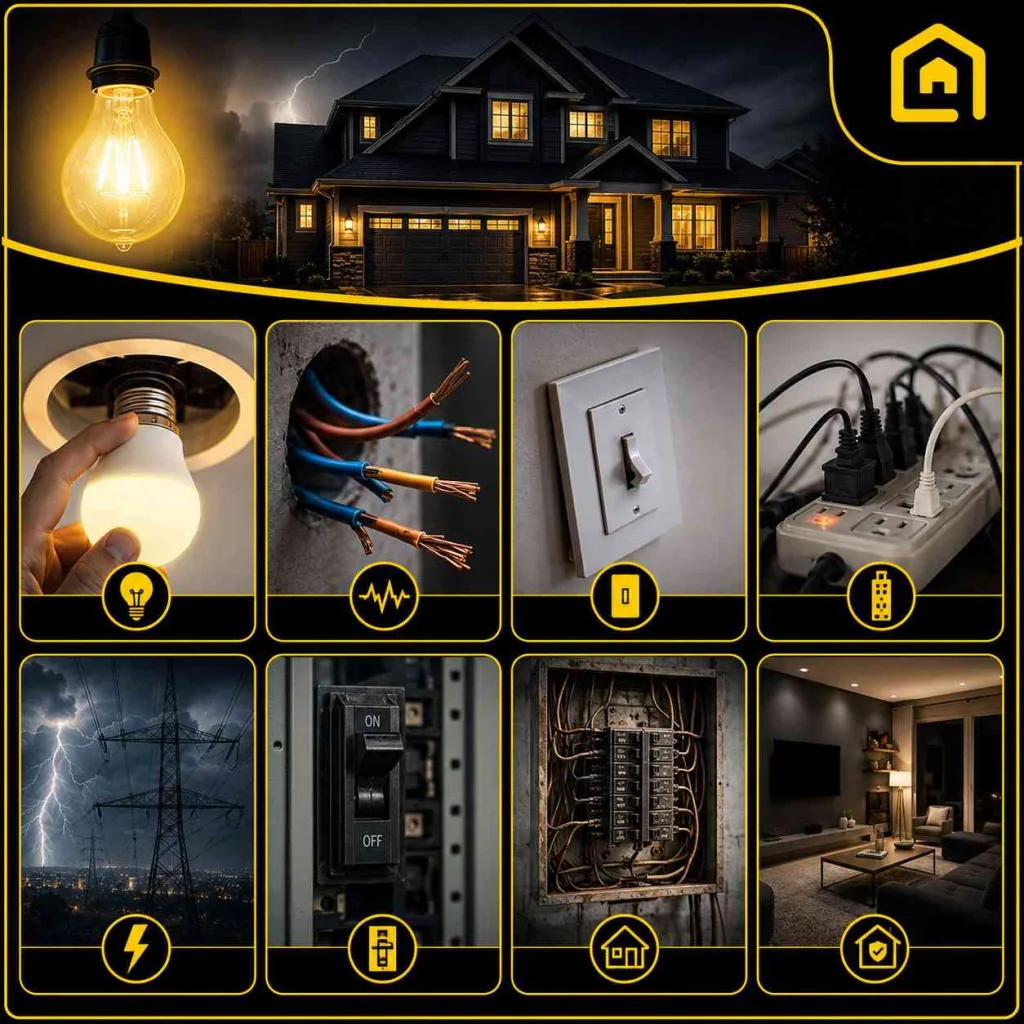
The most common causes include:
Loose Light Bulb Connection
A loose bulb is one of the easiest reasons why a light may flicker. When the bulb is not properly connected to the socket, electricity does not flow smoothly. This causes the light to turn on and off quickly.
This problem is common with:
- LED bulbs
- Ceiling lights
- Older light fixtures
- Bulbs that have been recently replaced
How to fix it
Turn off the light and allow the bulb to cool down. Remove the bulb carefully and install it again properly. Make sure it is tight but do not force it because too much pressure can damage the bulb or socket.
If the light continues flickering after changing the bulb, the problem may be somewhere else.
Loose or Damaged Wiring
Electrical wiring carries power from your electrical panel to your lights. If a wire connection becomes loose, electricity may not flow properly. This can cause lights to flicker randomly.
Loose wiring can happen because of:
- Old electrical systems
- Poor installation
- Damaged wires
- Regular wear and tear
This problem should not be ignored because loose wires can create heat and increase the risk of electrical fires.
Signs of wiring problems include:
- Lights flickering in different rooms
- Burning smell near switches or outlets
- Buzzing sounds from walls
- Warm outlets or switches
If you notice these signs, it is better to call an electrician instead of trying to repair the wiring yourself.
Faulty Light Switch
Sometimes the problem is not the bulb but the switch controlling the light.
A damaged switch may not send a steady electrical connection to the light fixture. This can make the light blink or flicker.
A faulty switch may show signs like:
- Flickering when you touch the switch
- Loose switch movement
- Crackling sounds
- Switch feels warm
Replacing a light switch is usually a simple repair, but electricity work should always be handled carefully.
Overloaded Electrical Circuit
Every electrical circuit in your home has a limit. When too many devices use power from the same circuit, it can become overloaded.
For example, if your refrigerator, microwave, air conditioner, and other heavy appliances are running on the same circuit, your lights may dim or flicker.
You may notice this problem when:
- AC turns on
- Refrigerator starts cooling
- Washing machine begins a cycle
- Large appliances start running
An overloaded circuit means your home is demanding more electricity than that circuit can safely provide.
A professional electrician can check your electrical system and recommend the right solution.
Voltage Fluctuation Problems
Voltage is the amount of electrical power flowing through your home. When voltage changes too much, your lights may flicker.
Small voltage changes can happen normally. However, frequent or strong voltage fluctuations can damage electrical devices.
Common causes include:
- Problems with the power supply
- Issues with electrical connections
- Utility company problems
- Damaged electrical equipment
If your entire house lights are flickering, voltage problems could be the reason.
Faulty Circuit Breaker
Your circuit breaker protects your home by stopping electricity when there is a problem. If the breaker becomes old or damaged, it may not work properly.
A faulty breaker can cause:
- Flickering lights
- Power interruptions
- Tripping frequently
- Burning smell from the electrical panel
The electrical panel is an important part of your home’s safety system. If you suspect a breaker problem, contact a qualified electrician.
Old Electrical System
Many older homes have electrical systems that were not designed for today’s modern appliances.
Years ago, homes used less electricity. Today, we use:
- Smart devices
- Large TVs
- Computers
- Air conditioners
- Multiple kitchen appliances
An old electrical system may struggle to handle modern power needs, causing lights to flicker.
If your home has old wiring or an outdated electrical panel, an electrical inspection can help identify problems before they become serious.
Why Are My LED Lights Flickering?
LED lights are energy efficient and popular in many homes, but they can sometimes flicker.
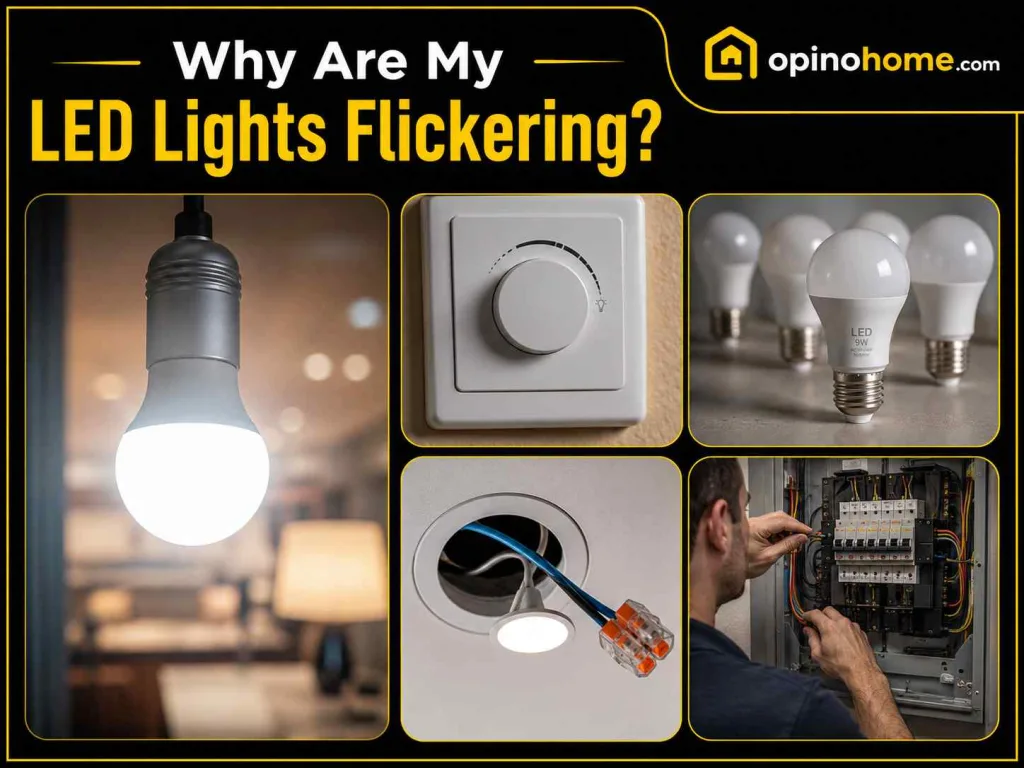
Common reasons for LED light flickering include:
Incompatible Dimmer Switch
Many LED bulbs do not work properly with older dimmer switches. The dimmer may not control the LED bulb correctly, causing it to blink or flicker.
Low Quality LED Bulb
Cheap LED bulbs may have poor internal components. These bulbs can start flickering after a short time.
Wrong Bulb Type
Not every LED bulb works with every fixture. Using the wrong bulb can create electrical problems.
Loose LED Connection
Just like regular bulbs, LED bulbs can flicker if they are not properly connected.
How to fix LED flickering
Try these solutions:
- Tighten the bulb
- Replace the bulb with a better quality LED
- Check if the dimmer switch supports LED bulbs
- Ask an electrician if the problem continues
Why Do Lights Flicker When Appliances Turn On?
Many homeowners notice that their lights flicker when they turn on a large appliance. For example, the lights may become slightly dim when the air conditioner starts or when the refrigerator begins its cooling cycle.
This happens because large appliances need more electricity when they start running. A small amount of voltage drop can happen for a moment, which may cause the lights to flicker.
Occasional small flickering may not be a serious problem. However, if the flickering is strong, happens often, or affects many lights in your home, it may indicate an electrical issue.
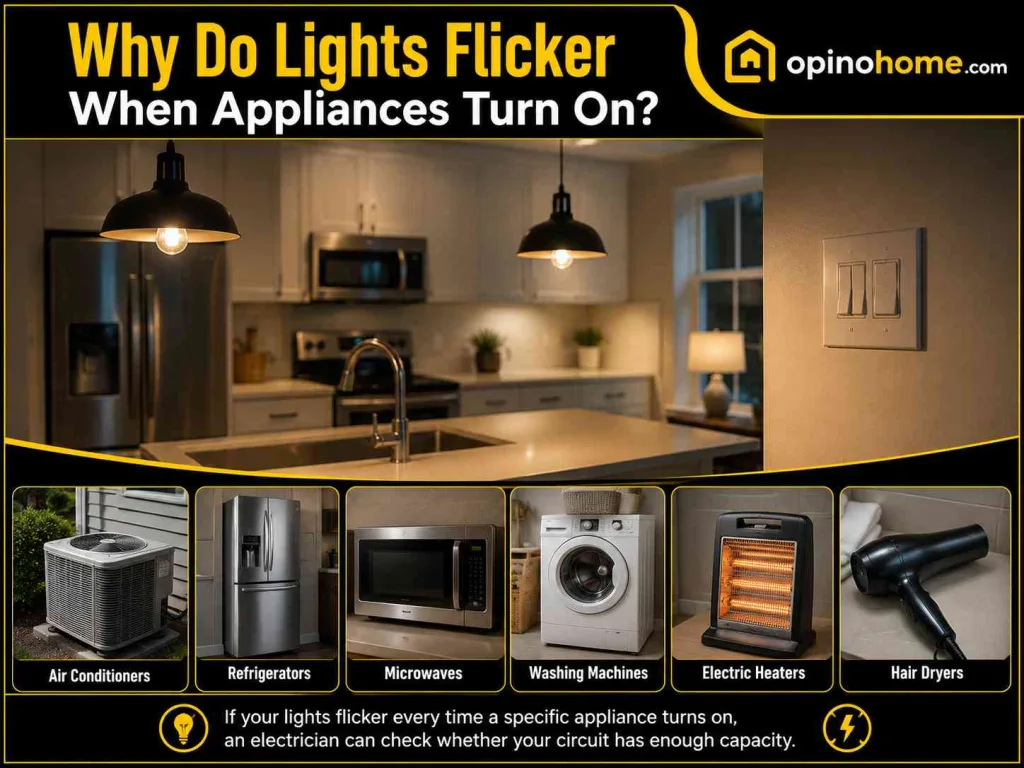
Common appliances that can cause flickering include:
- Air conditioners
- Refrigerators
- Microwaves
- Washing machines
- Electric heaters
- Hair dryers
If your lights flicker every time a specific appliance turns on, an electrician can check whether your circuit has enough capacity.
Is a Flickering Light Dangerous?
A flickering light is not always dangerous. Sometimes the cause is as simple as a loose bulb. But in some cases, it can be a warning sign of a serious electrical problem.
You should take flickering lights seriously if you notice any of these signs:
Burning Smell
A burning smell near lights, switches, outlets, or the electrical panel may mean wires are overheating.
Sparks or Smoke
Sparks coming from a switch or outlet should never be ignored. Turn off the power if it is safe to do so and contact an electrician.
Multiple Lights Flickering
If lights in different rooms are flickering at the same time, the problem may be related to your electrical system.
Buzzing Sounds
A buzzing noise from a light fixture, outlet, or electrical panel can indicate a loose connection or damaged component.
Warm Switches or Outlets
Electrical parts should not feel hot. A warm outlet or switch may be a sign of an electrical problem. Ignoring these warning signs can increase the risk of electrical damage or fire.
How to Fix Flickering Lights Safely
Before calling an electrician, you can check a few simple things. However, never try to repair electrical wiring if you do not have proper knowledge.
Here are some safe steps you can follow.
Check the Light Bulb
First, check if the bulb is loose. Turn off the light and tighten the bulb carefully.
If the problem continues, replace the bulb with a new one.
Test a Different Bulb
Sometimes the bulb itself is damaged. Try replacing it with a new bulb to see if the flickering stops.
Check Other Lights
Notice whether the problem affects:
- One bulb
- One room
- Several rooms
- The entire house
This information can help identify the cause.
Check Your Appliances
Pay attention to whether flickering happens when you use large appliances. If the lights only flicker when certain appliances start, your electrical circuit may need inspection.
Avoid Overloading Outlets
Do not connect too many high-power devices to the same outlet or extension cord. Too much electrical demand can create problems and may damage your home electrical system.
When Should You Call an Electrician for Flickering Lights?
Some flickering light problems are simple, but others require professional help.
You should contact an electrician if:
- All lights in your house are flickering
- Flickering happens frequently
- Lights become very dim
- You smell burning
- You hear buzzing sounds
- Your circuit breaker keeps tripping
- Your home has old wiring
- Outlets or switches feel warm
An electrician can inspect your wiring, electrical panel, voltage levels, and connections to find the real cause.
Trying to fix serious electrical problems yourself can be dangerous. Professional inspection can help prevent bigger problems in the future.
How Much Does It Cost to Fix Flickering Lights in the USA?
The cost of fixing flickering lights depends on the cause of the problem. A simple bulb replacement may cost very little, while repairing electrical wiring or upgrading a panel can cost more.
Average repair costs may include:
| Problem | Estimated Cost |
|---|---|
| Replace light bulb | $5 to $20 |
| Replace light switch | $100 to $250 |
| Repair loose wiring | $150 to $500 |
| Fix light fixture problem | $100 to $300 |
| Electrical panel repair | $300 to $1,500 |
| Electrical inspection | $100 to $300 |
Prices can vary depending on your location, the size of the problem, and the electrician’s rates.
How to Prevent Lights From Flickering
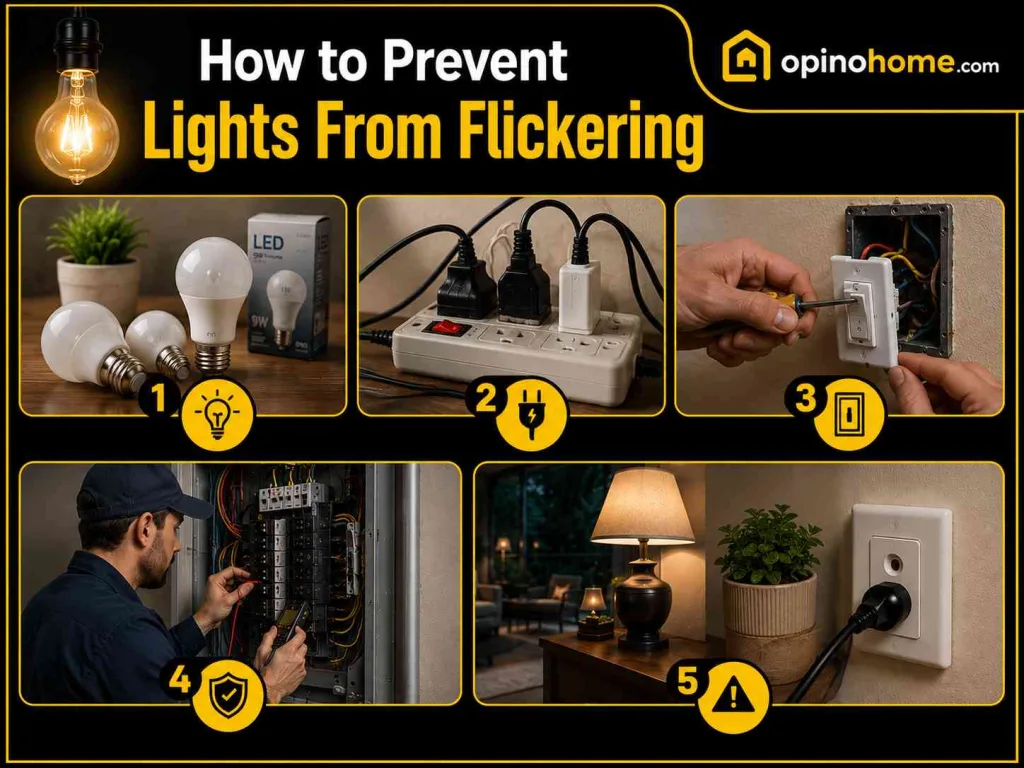
Regular maintenance can help prevent electrical problems. Follow these simple tips:
Use Good Quality Bulbs
Cheap bulbs often fail faster. Choose reliable LED bulbs from trusted brands.
Avoid Overloading Circuits
Do not run too many heavy appliances on the same circuit.
Replace Old Electrical Parts
Old switches, outlets, and fixtures can create problems over time.
Schedule Electrical Inspections
A professional electrical inspection can identify hidden problems before they become dangerous.
Pay Attention to Warning Signs
Do not ignore small electrical issues. Fixing a problem early can save money and prevent damage.
Final Thoughts
Lights flickering in your house can happen for many reasons. Sometimes the solution is simple, such as tightening a loose bulb or replacing an old LED. In other situations, flickering lights can point to deeper electrical problems.
Pay attention to warning signs like burning smells, buzzing sounds, frequent flickering, or multiple lights being affected.
A professional electrician can safely inspect your electrical system and find the exact cause. Fixing the problem early can protect your home, appliances, and family from future electrical issues.
FAQs
Why are my house lights flickering randomly?
Random flickering can happen because of loose bulbs, wiring problems, voltage changes, or issues with the electrical panel. If it happens often, an electrician should inspect your system.
Are flickering lights a sign of an electrical problem?
Yes, sometimes flickering lights indicate an electrical issue. The cause can be simple, like a loose bulb, or serious, like damaged wiring.
Why do my LED lights flicker but other lights do not?
LED lights can flicker because of incompatible dimmer switches, poor-quality bulbs, or incorrect installation.
Should I replace my flickering light bulb?
You can try replacing the bulb first. If the new bulb also flickers, the problem may be with the fixture, switch, wiring, or electrical system.