When shopping for an outdoor sauna, most homeowners compare the design, heater, or seating capacity. But there’s one feature that often goes unnoticed—wood thickness.
It may not be the first thing you ask about, but the thickness of the wood plays a major role in how well a sauna performs over time. From heat retention and structural stability to long-term durability, choosing the right wood thickness can make a noticeable difference in your overall sauna experience.
If you’re investing in a backyard sauna, here’s why this detail deserves your attention.
Why Wood Thickness Matters
An outdoor sauna faces changing weather throughout the year. In Canada, that could mean freezing winters, humid summers, heavy rain, or fluctuating temperatures within the same week.
Thicker wood provides a stronger, more stable structure that can better handle these conditions. It also creates a solid barrier that helps maintain consistent temperatures inside the sauna, making each session more comfortable and energy efficient.
Simply put, the right wood thickness helps your sauna last longer while performing better.
Better Heat Retention
One of the biggest advantages of thicker sauna walls is improved heat retention.
Wood naturally acts as an insulator, but thicker boards slow down heat transfer even more. Instead of allowing warmth to escape quickly, the wood stores heat and releases it gradually.
This offers several benefits:
- Faster recovery after opening the door
- More consistent temperatures during your session
- Reduced heat loss in colder weather
- Less strain on your sauna heater
For homeowners who use their sauna year-round, especially during Canadian winters, this can significantly improve the overall experience.
Improved Structural Strength
Outdoor saunas constantly expand and contract as temperatures change. Over time, thinner wood is generally more susceptible to movement caused by repeated heating, cooling, and moisture exposure.
Using quality, thicker lumber helps create a stronger frame that remains more stable throughout the seasons.
This contributes to:
- Better resistance to warping
- Reduced movement between boards
- Improved long-term durability
- Greater overall structural integrity
When properly maintained, a well-built outdoor sauna can provide decades of reliable use.
Why Cedar Is A Popular Choice
While wood thickness is important, the type of wood matters just as much.
Western Red Cedar is one of the most popular materials used in premium outdoor saunas—and for good reason.
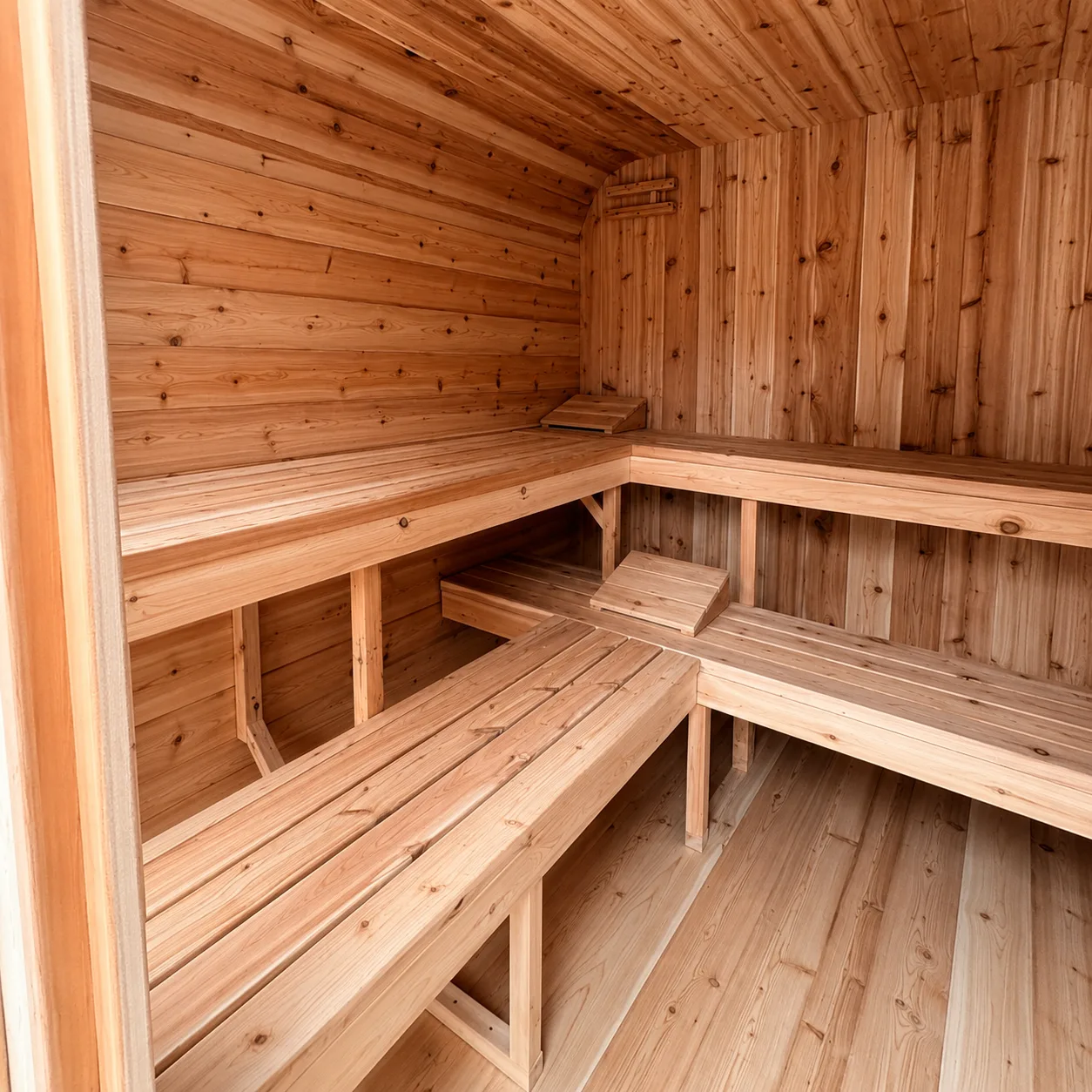
Cedar naturally contains oils that help resist moisture, decay, and insects without relying on chemical treatments. It also remains comfortable to the touch, even when the sauna reaches high temperatures.
Beyond its durability, cedar offers a warm, natural aroma that many sauna owners associate with relaxation and wellness.
When thicker cedar boards are used in sauna construction, homeowners benefit from both excellent insulation and the long-lasting performance cedar is known for.
Does Thicker Always Mean Better?
Not necessarily.
Extremely thick wood doesn’t automatically create a better sauna. The ideal balance depends on the overall design, construction quality, ventilation, insulation, and heater selection.
A professionally designed sauna considers all of these elements together.
That’s why it’s important to focus on the overall craftsmanship rather than choosing the thickest wood available.
Other Factors That Affect Sauna Durability
Wood thickness is only one piece of the puzzle. A durable outdoor sauna also depends on:
- High-quality cedar or other premium wood species
- Precision craftsmanship and tight-fitting joints
- Proper roof design for water drainage
- Adequate ventilation
- A reliable sauna heater
- Routine cleaning and maintenance
When these components work together, your sauna remains comfortable, efficient, and built to withstand years of outdoor use.
Choosing A Sauna Built To Last
Buying an outdoor sauna is a long-term investment in both your home and your well-being. While design and appearance certainly matter, the construction behind the walls is what determines how your sauna performs season after season.
Paying attention to details like wood thickness, wood species, and overall build quality can help ensure your investment continues delivering comfort, relaxation, and reliable performance for many years.
Final Thoughts
The role of wood thickness in outdoor sauna durability is often underestimated, but it has a meaningful impact on heat retention, structural stability, and long-term performance.
Combined with premium Western Red Cedar, quality craftsmanship, and proper maintenance, the right wood thickness helps create an outdoor sauna that’s ready for every Canadian season.
Whether you’re considering a Barrel Sauna, Cube Sauna, Modern Sauna, or a Custom Outdoor Sauna, choosing a well-built model ensures you’ll enjoy the warmth, comfort, and wellness benefits of sauna living for years to come.