Wabi Sabi Bedroom Ideas for a Calm Minimalist Retreat

Some bedrooms are designed to impress the moment you walk through the door. A wabi sabi bedroom does almost the opposite. It invites you to slow down, notice the little imperfections, and appreciate a space that feels lived in rather than carefully staged.
If you are tired of rooms that look too polished or feel like they need constant tidying, this approach can be wonderfully refreshing. What I enjoy most about this style is its attitude toward imperfection.
You are not trying to create a flawless bedroom. You are creating somewhere that feels honest, comfortable, and quietly beautiful.

1. Raw Plaster Wall Finish
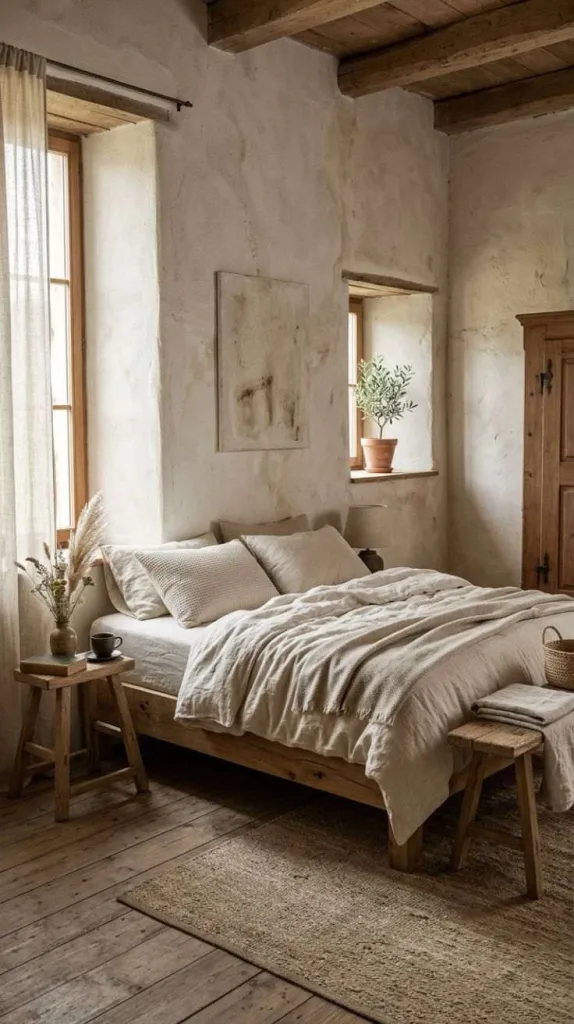
Soft, uneven plaster walls bring subtle texture and a handmade quality to the space. Their natural imperfections look beautiful beside simple wooden furniture and neutral bedding. For a wabi sabi bedroom, this finish creates a quiet backdrop that changes gently with the light throughout the day.
2. Imperfect Handmade Ceramics
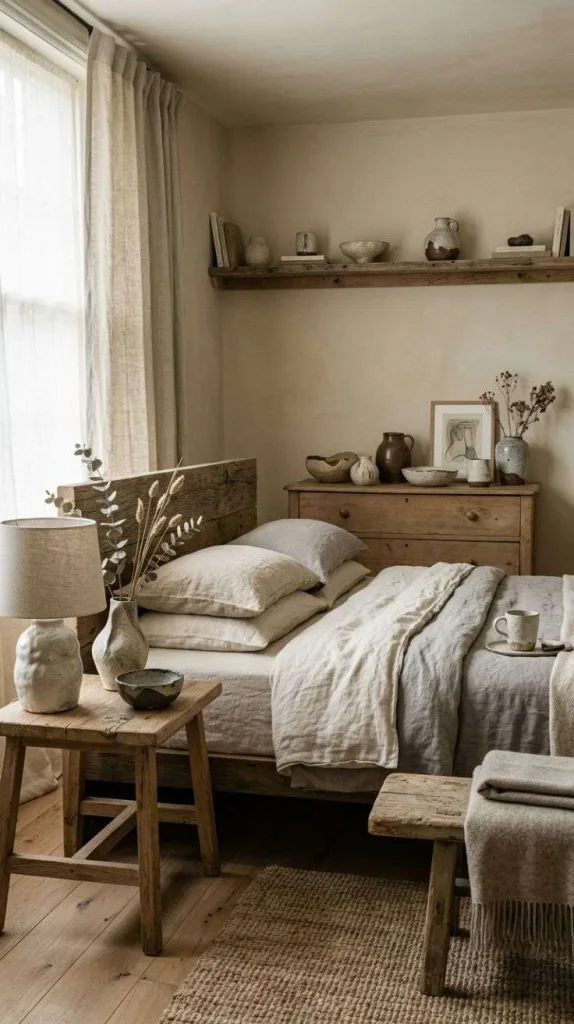
Place handmade bowls, vases, and pottery on nightstands, shelves, or a dresser to introduce organic character. Uneven edges and natural glazing make each piece feel unique rather than mass produced. These small details add warmth to a wabi sabi bedroom while celebrating the beauty of imperfection.
3. Aged Wood Furniture
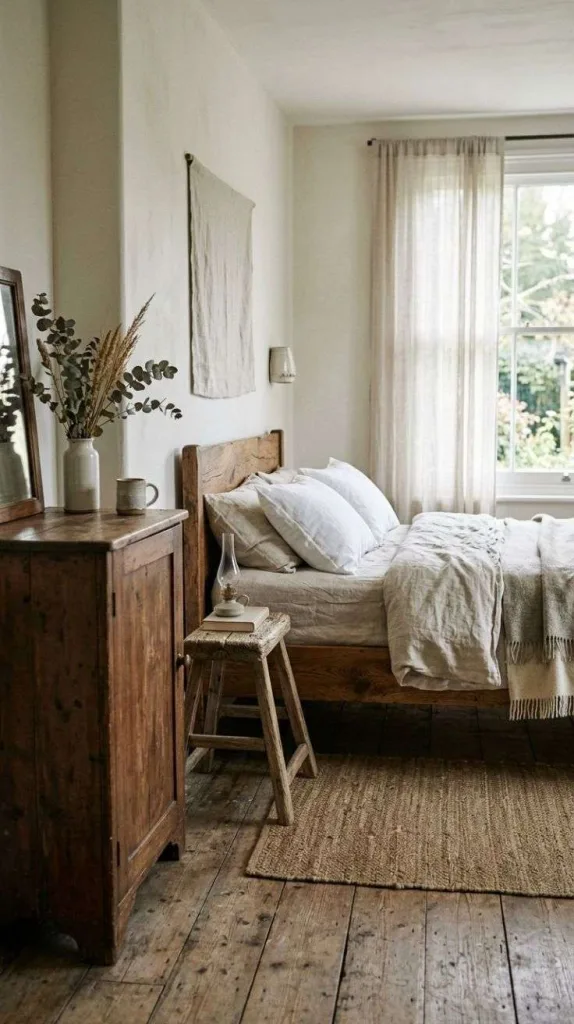
Choose wooden furniture with visible grain, worn edges, and naturally weathered surfaces to give the room a sense of history. A simple bed frame, vintage stool, or old dresser can provide plenty of character. The aged finishes make the wabi sabi bedroom feel grounded, warm, and effortlessly lived in.
4. Earthy Clay Color Palette
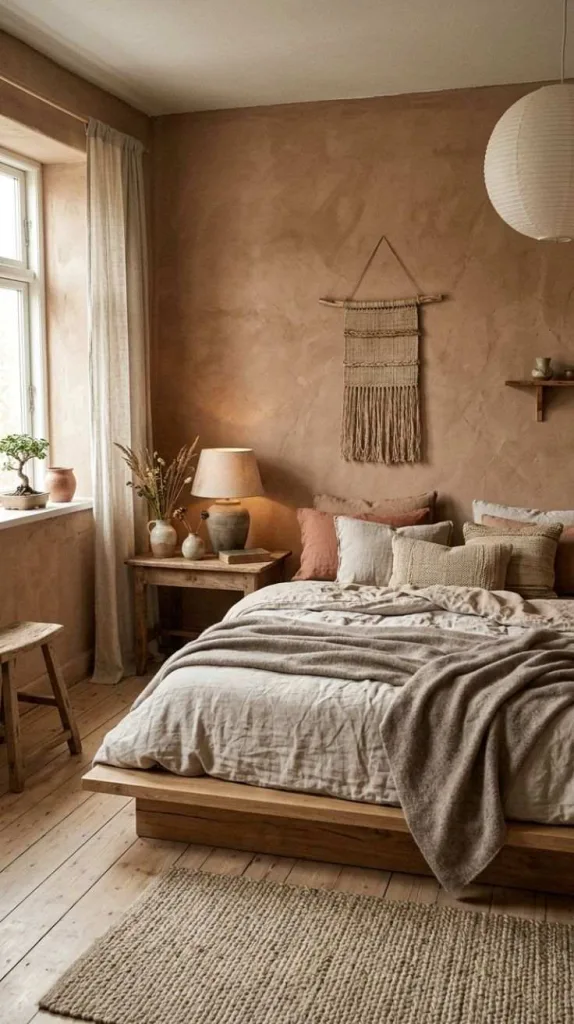
Warm clay, sand, beige, taupe, and muted terracotta create a soothing palette inspired by natural landscapes. Layer these tones through the walls and decorative pieces instead of relying on one dominant colour. The warm, grounded palette can also take cues from a Terracotta Bedroom, especially when you want earthy tones to feel rich
5. Japanese Farmhouse Simplicity
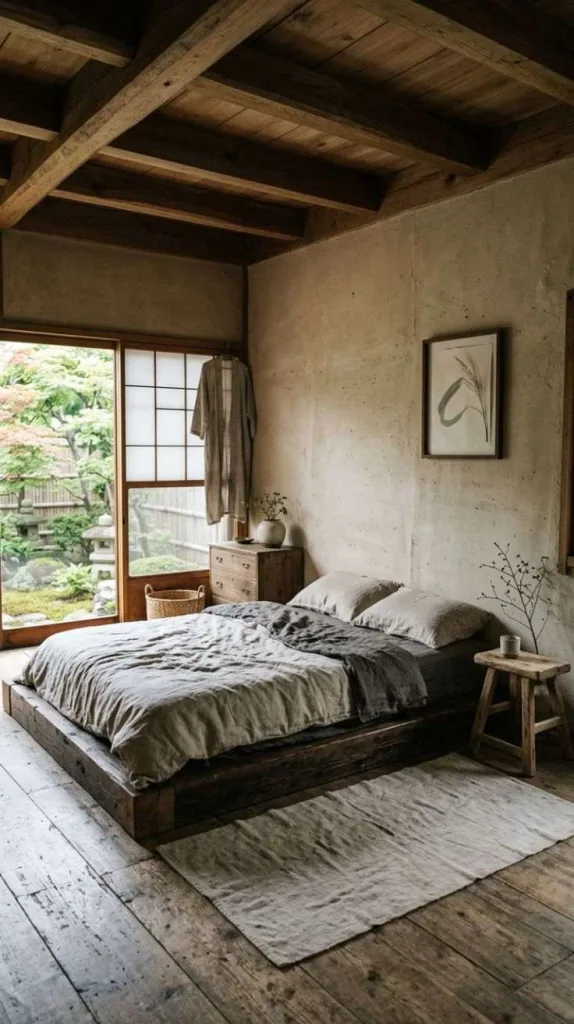
Blend rustic farmhouse materials with Japanese simplicity by choosing low furniture, natural wood, linen textiles, and minimal decoration. Keep the room open and avoid filling every surface with accessories. This understated approach gives the wabi sabi bedroom a peaceful character that feels practical, timeless, and deeply connected to nature.
6. Weathered Linen Bedding

Let relaxed linen bedding become the softest feature in the room, using loosely layered sheets, quilts, and throws in muted neutral shades. Its naturally rumpled texture adds comfort . For a softer interpretation of this lived in style, the relaxed textures can work beautifully in a Classic Bedroom while still keeping the overall look understated.
7. Asymmetrical Decor Arrangement
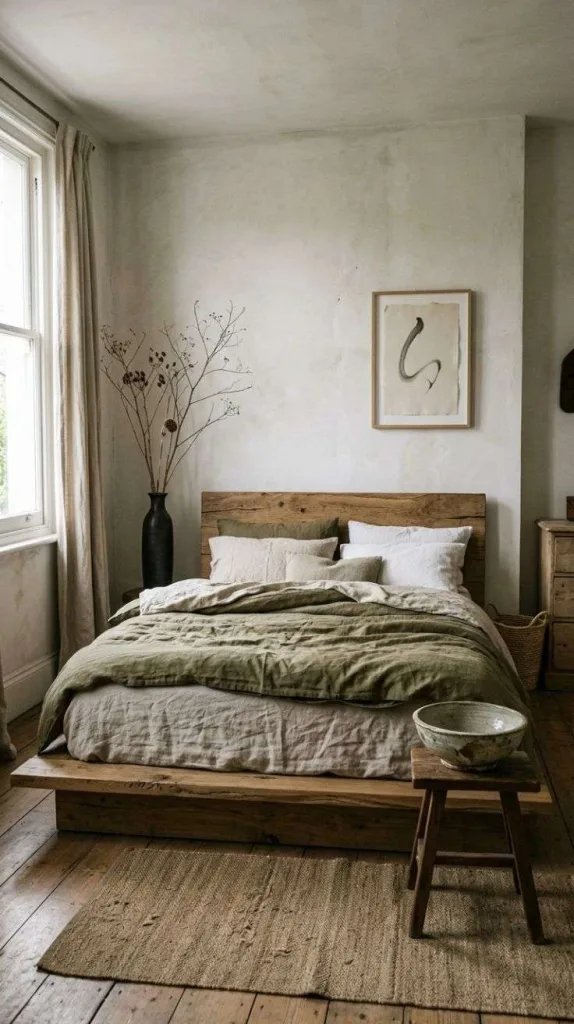
Forget perfectly matching bedside tables or evenly spaced accessories and create a display with gentle visual imbalance instead. Pair a tall vase with a low ceramic bowl or offset artwork on one side of the bed. This relaxed arrangement gives wabi sabi bedroom styling a more natural and spontaneous feeling.
8. Stone And Clay Accents

Introduce earthy materials through stone lamps, clay vessels, ceramic trays, or small sculptural objects. Their rough and varied surfaces create subtle contrast against soft linen and smooth wooden furniture. Combining these natural textures can make a wabi sabi bedroom feel richer without adding unnecessary colour or decoration.
9. Reclaimed Antique Pieces

Give the room character by bringing in one or two antique pieces with visible wear, such as an old wooden stool, cabinet, or bedside table. Their imperfections add a sense of history and individuality. Reclaimed furnishings can also add depth to a Brown Bedroom, particularly when weathered wood and warm earthy finishes are allowed to remain visible.
10. Quiet Zen Inspired Styling

Keep the overall space peaceful with open floor areas, soft natural lighting, simple furniture, and only a few meaningful decorative pieces. Avoid excessive patterns and let natural textures provide most of the visual interest. The result is a wabi sabi bedroom that feels uncluttered, restorative, and beautifully understated.
Final Thoughts
Creating a wabi sabi bedroom is less about following a strict decorating formula and more about changing the way you look at your surroundings. Most importantly, you do not need to replace everything you own.
Maybe the most beautiful bedroom is not the one where everything looks perfect. Maybe it is the one where you can finally stop worrying about perfection, turn off the light, climb into your slightly rumpled bed, and simply enjoy being there.