Montessori Bedroom Ideas for a Calm Child-Friendly Space
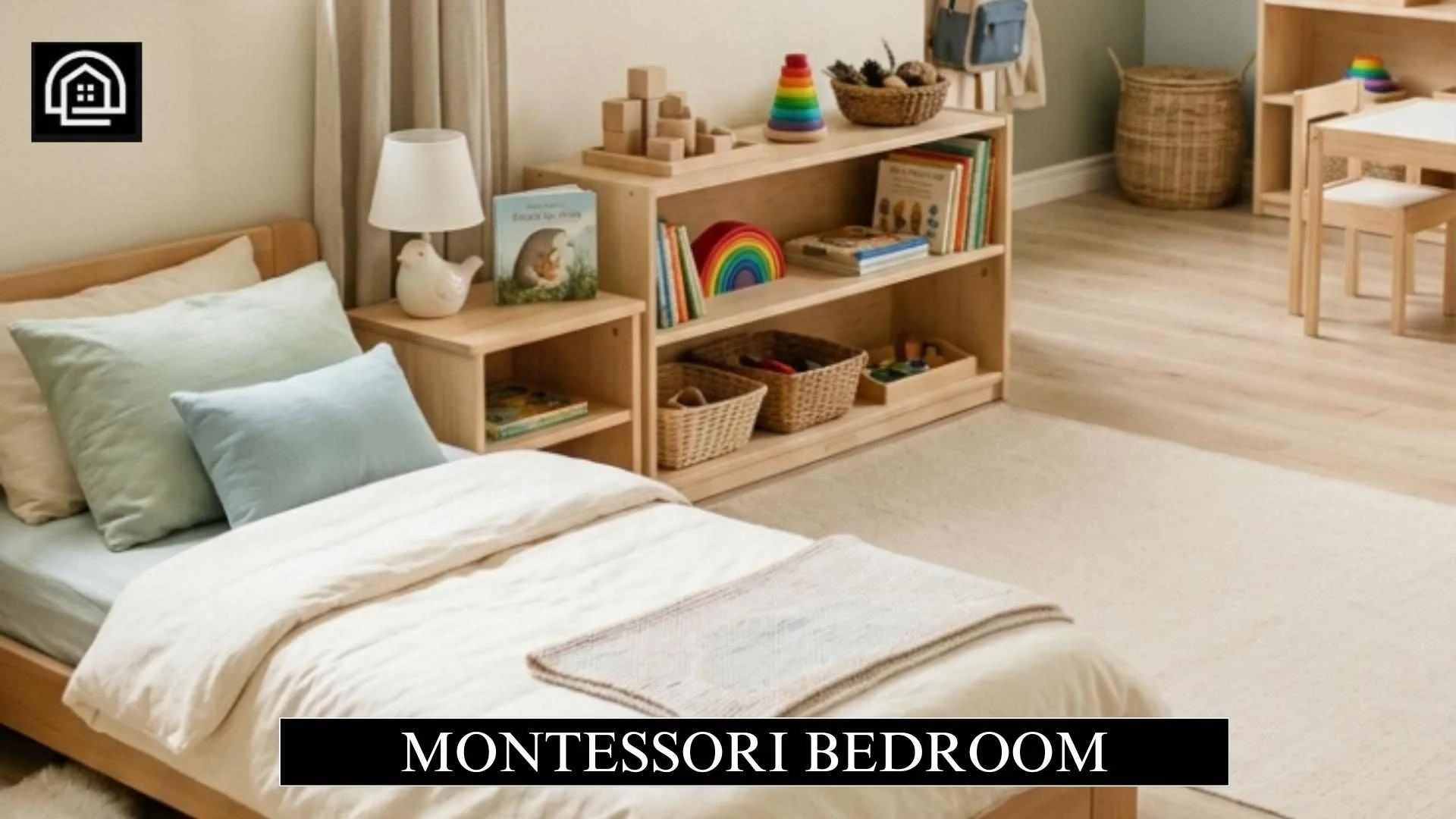
A child’s room does not need towering furniture or decorations placed completely out of reach to look beautiful. In fact, sometimes the simplest setup works best because it gives children more freedom to explore their own space. A montessori bedroom focuses on creating a room that feels genuinely designed around the child rather than the adult.
Imagine a little one choosing their clothes, reaching for a favorite book, or climbing into bed without needing help every time. That small sense of independence can make an ordinary bedroom feel much more meaningful.
1. Floor Bed Setup
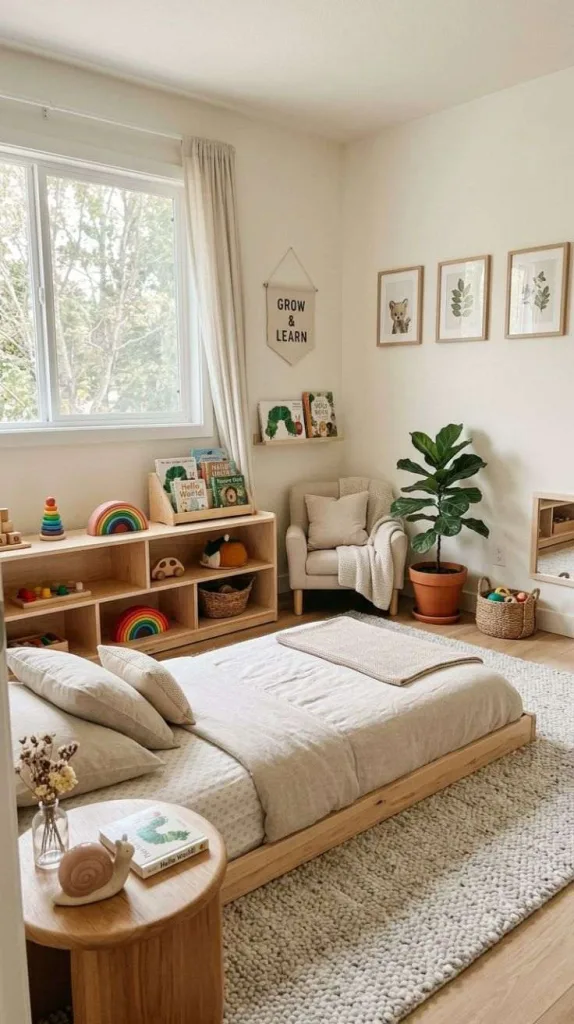
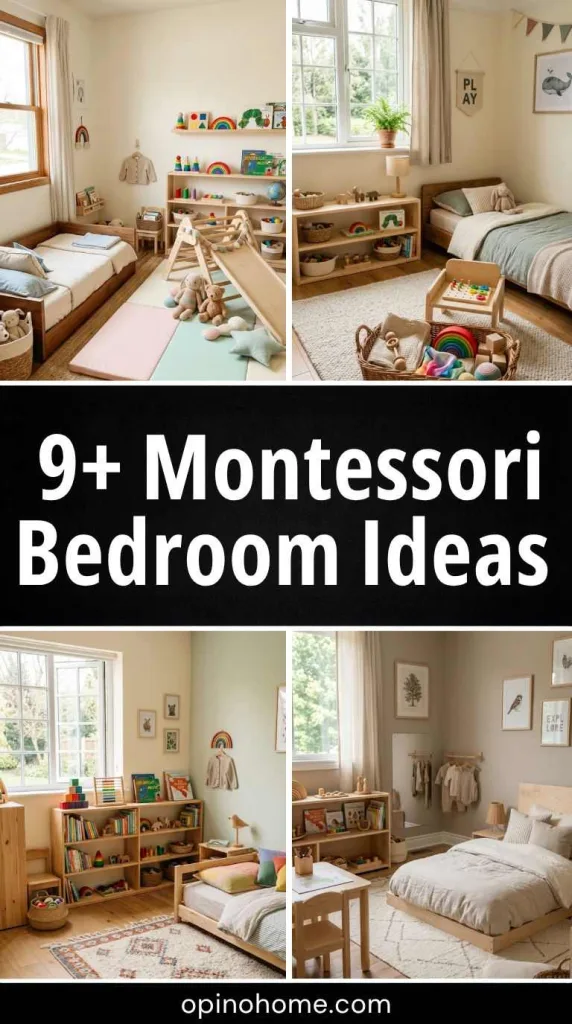
A low floor bed gives children the freedom to get in and out of bed independently while keeping the sleeping area simple and accessible. Choose a sturdy mattress or low platform and leave enough open space around it for safe movement. This practical foundation allows a Montessori bedroom to encourage independence from an early age.
2. Child Accessible Storage
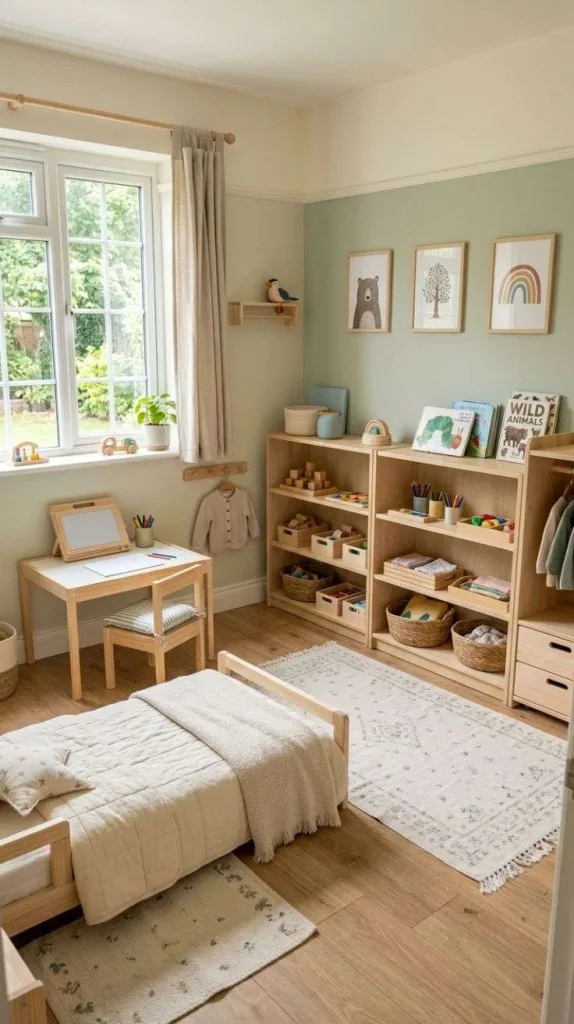
Place baskets, drawers, and shelves at a height where children can easily reach their own belongings. Keeping favourite toys and everyday essentials within view also makes tidying up easier to learn. Thoughtful storage can help a Montessori bedroom feel organised while giving children more control over their daily routines.
3. Low Level Bookshelves
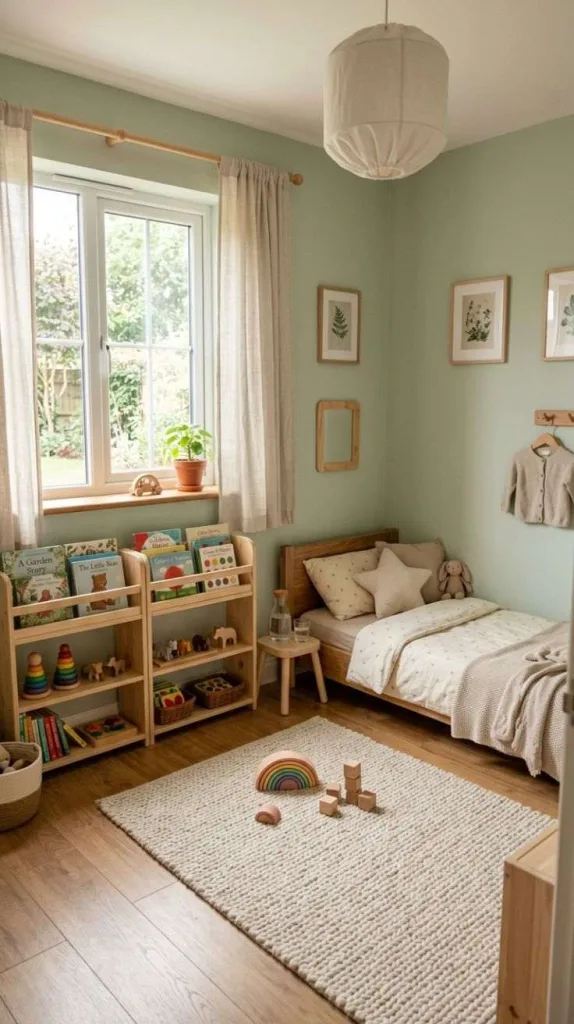
Display books on low shelves with their covers facing outward so children can see and choose what interests them. Rotate the selection occasionally to keep the reading area engaging. A simple Bedroom Rug underneath the reading area can make the corner feel softer and more inviting while giving children a comfortable spot to sit and explore books.
4. Open Toy Display
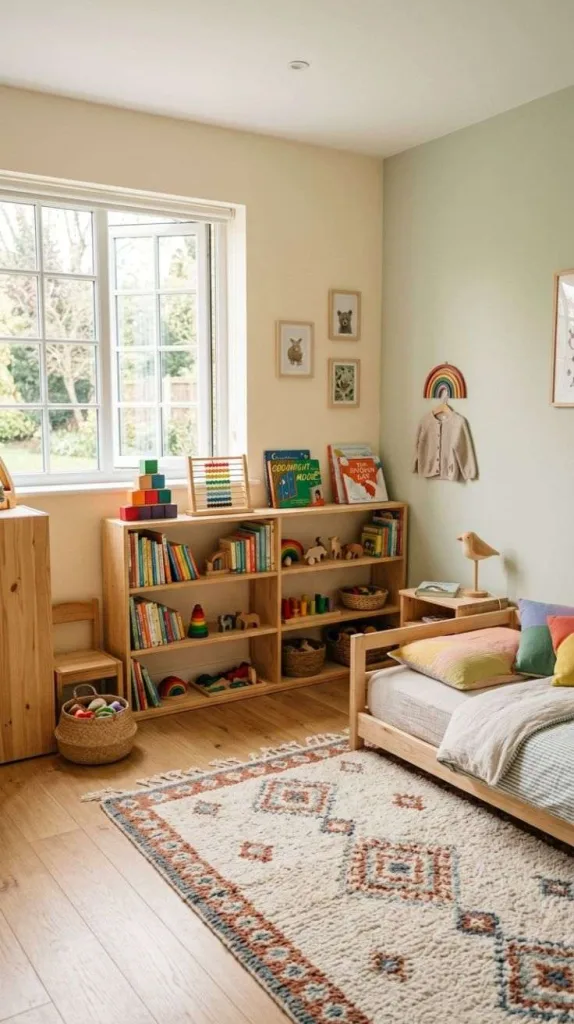
Instead of hiding every toy inside closed cupboards, use a few open baskets or low shelves to create an accessible display. Keep only a manageable selection available so the room remains calm and easy to navigate. An open arrangement supports the independent spirit of a Montessori bedroom while making play materials easy for children to choose.
5. Soft Play Corner
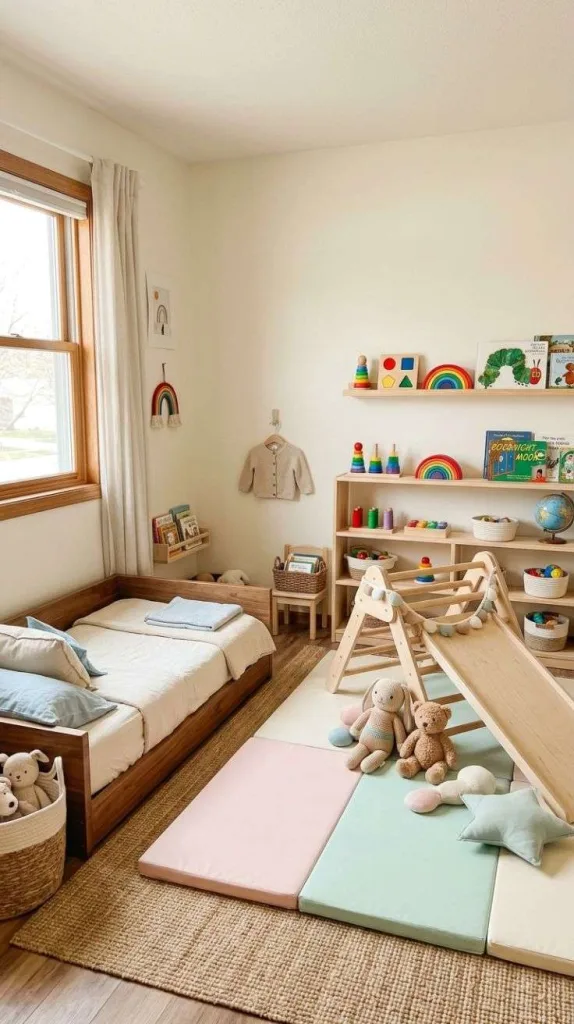
Set aside a cosy corner with a soft rug, floor cushions, climbing elements, or age appropriate play equipment. Keep the area open enough for children to move, stretch, and explore comfortably. A dedicated play zone brings movement into a Montessori bedroom without allowing toys and activities to take over the entire room.
6. Low Hanging Clothing Rail
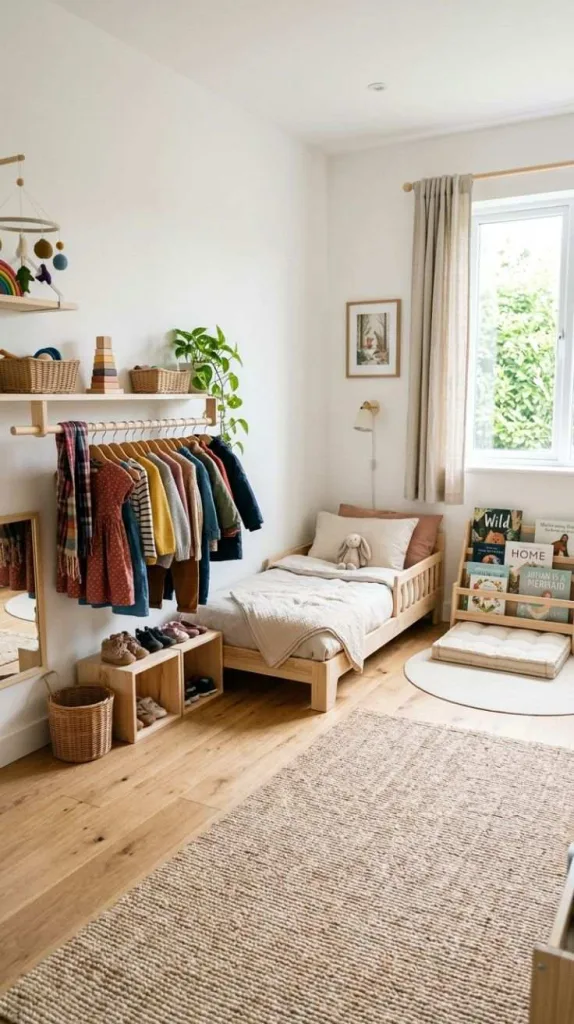
Install a child height clothing rail where a few everyday outfits can be displayed within easy reach. Letting children choose between simple options can make getting dressed feel more independent and enjoyable. This small feature adds practical value to a Montessori bedroom while encouraging children to take part in their daily routines.
7. Neutral Color Palette
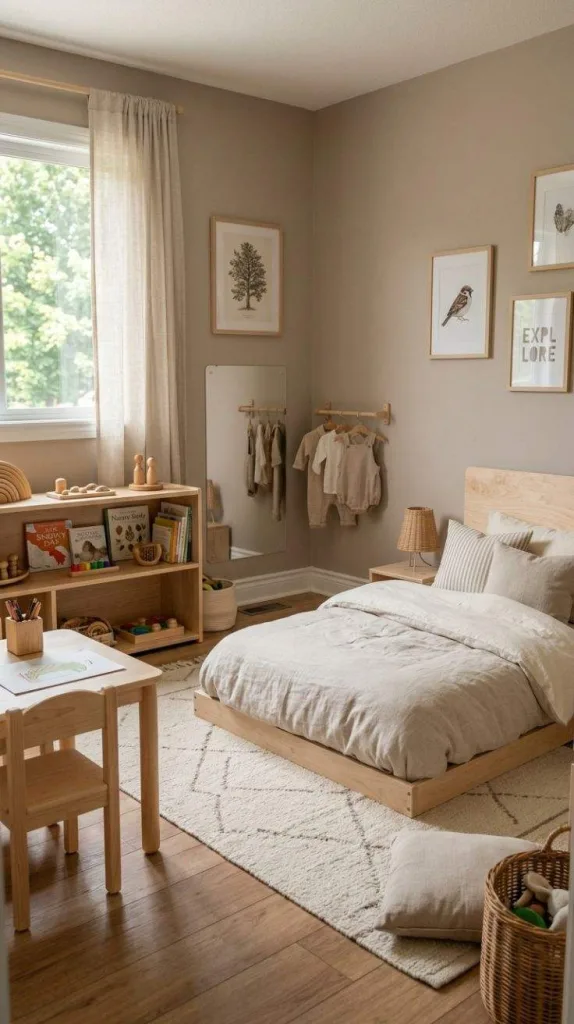
Soft beige, warm white, muted green, pale wood, and other gentle shades can create a calm backdrop for play and rest. Keep brighter colours in artwork, toys, and textiles so the room still feels cheerful. Keeping these tones balanced is one of the easiest ways to build soothing Bedroom Color Schemes without making the space feel dull.
8. Montessori Art Display
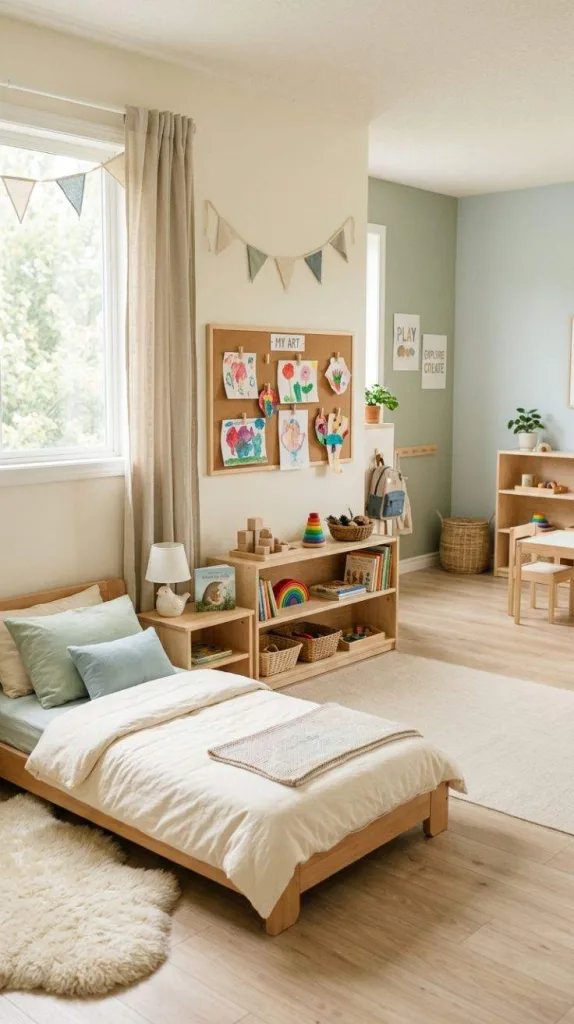
Hang a few pieces of artwork at the child’s eye level rather than placing everything high on the walls. Use simple frames or rotating picture ledges so the display can change as their interests develop. Child accessible artwork gives a Montessori bedroom a personal quality while encouraging children to engage with their surroundings.
9. Sensory Discovery Basket
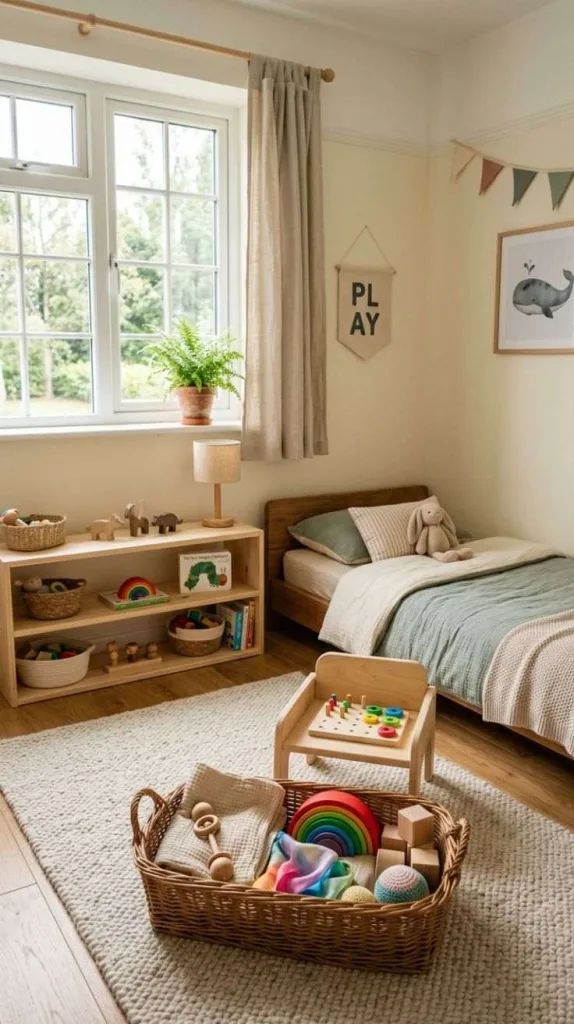
Fill a low basket with safe, age appropriate objects featuring different textures, shapes, and materials for children to explore. Wooden pieces, soft fabrics, natural objects, and simple sensory toys can provide plenty of interest. A thoughtfully prepared basket adds an interactive element to a Montessori bedroom while encouraging curiosity through hands-on discovery.
10. Montessori Climbing Wall
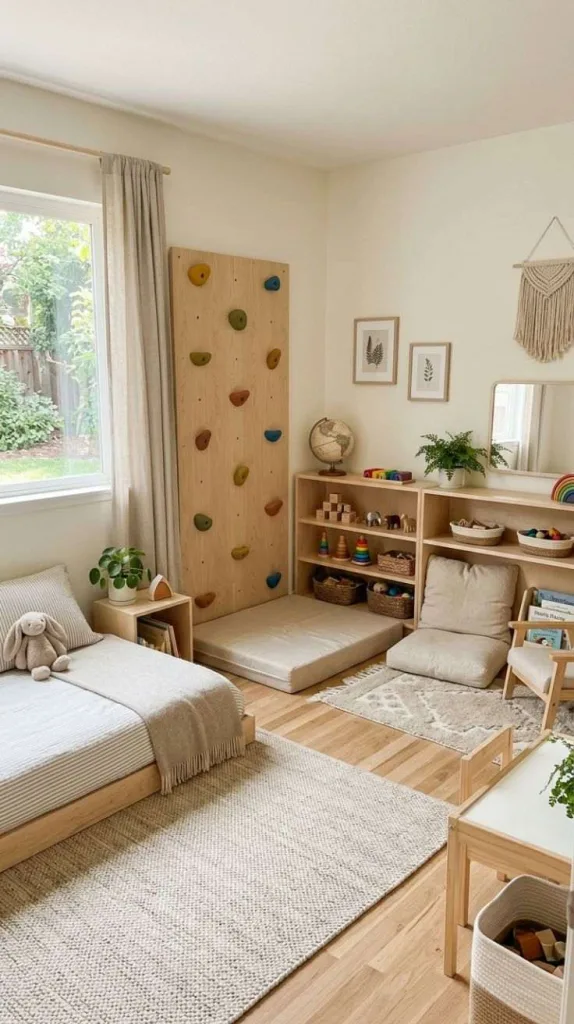
Create a dedicated movement area with an age appropriate climbing structure designed for supervised use. Keep appropriate safety and choose a setup suited to the child’s developmental stage. For a more Scandinavian inspired approach, elements from a Stockholm Bedroom can bring in pale wood, simple forms, and an uncluttered feel around the climbing area
Final Thoughts
Creating a child friendly bedroom is really about making everyday life easier and more enjoyable. Chosen personal details can turn a basic room into a place where children feel comfortable. You do not need to copy a picture perfectly or buy an entire matching furniture set.
Start with one area that could give your child more independence, then build from there. When a montessori bedroom feels natural and personal, it becomes more than a pretty space. It becomes a little environment where your child can explore, choose, learn, and grow.